Is Lady Angela easy to grow? A detailed analysis of its care difficulty
Among roses, there are some beautiful varieties. Among them, Lady Angela, with its graceful posture and rich fragrance, has become a striking sight.
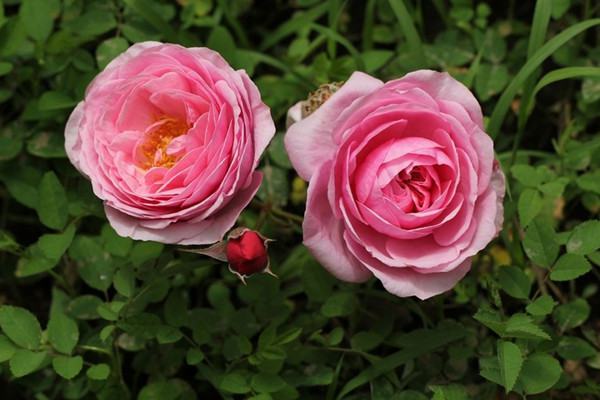
Lady Angela
Lady Angela, a beautiful shrub rose, is a plant that blooms in all four seasons. The flowers are coral red, the fragrance is very strong, and the blooming performance is very good, with an average flower stem of 8 cm, a very full flower form, opening in large clusters, and repeat blooming. The Lady Angela plant grows vigorously, upright, with strong growth, healthy leaves, and is very disease-resistant, with a plant height of 120-180 cm. It is a rare excellent variety bred in recent years.
Lady Angela is a descendant of the English rose Heritage. It has inherited almost all the advantages of Heritage and also made up for Heritage's shortcomings: the plant height is relatively a little smaller than Heritage, and its blooming performance, fragrance, flower quantity, and individual flower blooming period are close to or exceed those of Heritage. Moreover, a single branch produces multiple flowers, and the flower form is similar to Heritage, differing only in color.
Pruning Lady Angela
Proper pruning of Lady Angela during the growing period can promote branching, and the number of flowers will increase greatly. Otherwise, the apical dominance will be too strong, and the blooming cycle will be delayed. Cutting off spent flowers after blooming can promote repeat blooming. In spring, cut off old, weak, diseased, and crossing branches, then in warm regions, cut off 1/3 of the remaining branches; in cold regions, the pruning amount should be appropriately increased.
For more professional agricultural science and technology information, please scan the QR code to follow WeChat: NongXunNET

Please indicate the source when reprinting.