What kind of growing environment does white clover like?
Other names for white clover
White-flowered alfalfa, golden grass flower, shucao qiaoyao
Morphological characteristics of white clover
Leaves: palmately trifoliolate compound leaves; stipules ovate-lanceolate, membranous, the base clasping the stem and forming a sheath, the free part sharply pointed.
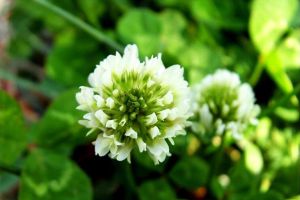
Flowers: inflorescence spherical, terminal, 15-40mm in diameter; the peduncle is very long, nearly 1 times longer than the petiole, bearing 20-50 (-80) flowers, densely clustered; no involucre; bracts lanceolate, membranous, with a tapering tip; flowers 7-12mm long; pedicels slightly longer than or equal to the calyx, drooping immediately after flowering.
Growth habits of white clover
White clover is a long-day plant and is not shade-tolerant. It has a certain degree of drought tolerance. It prefers a warm and humid climate and is not tolerant of prolonged waterlogging.
Main value of white clover
White clover is rich in various nutrients and mineral elements and has high value for forage, landscaping, genetic breeding and medicinal use. It can be used as green manure, a grass species for embankment protection, lawn decoration, as well as a nectar source and medicinal material.
White clover has strong invasiveness and competitiveness, can effectively inhibit weed growth, does not require long-term pruning, is extensively managed and has a long service life, helps improve soil and conserve soil and water, and can be used for establishing green lawns in gardens, parks, golf courses and other areas.
The flower language of white clover
Prayer, hope, love, happiness
For more professional agricultural science and technology information, please scan the QR code to follow WeChat: NongXunNET

Please indicate the source when reprinting.