What kind of growing environment does water wisteria like?
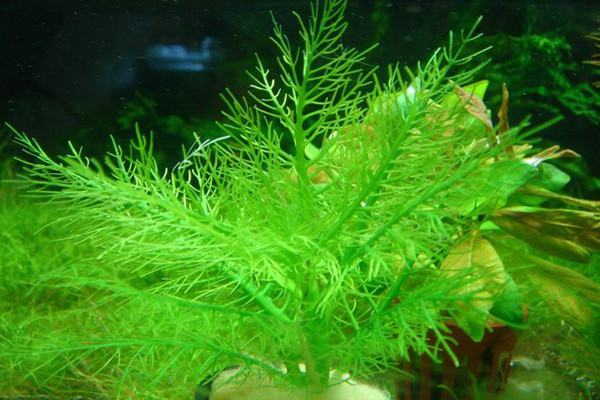
Water wisteria, just hearing this name, you know it is an aquatic herbaceous plant that lives in water. The leaves of water wisteria float in the water and sway back and forth like duck feet.
Alternative names of water wisteria
The alternative names of water wisteria include dragon whisker grass and carrying-pole grass. Because its leaves are relatively large, it is also called large-leaf chrysanthemum dragon whisker grass.
Morphological characteristics of water wisteria
The leaves of water wisteria are feather-shaped.
Whether it is an above-water plant or an underwater plant, water wisteria will show different changes in different seasons. The leaves of the above-water plant can be ovate opposite leaves or lobed leaves, and its plant body may or may not grow fine hairs, with lip-shaped light purple flowers growing from the leaf axils, and the leaf color is green.
Growth habits of water wisteria
Water wisteria likes weakly acidic to neutral water quality. When cultivated in hard water with a pH value higher than 7.5, the light must be strong in order to maintain the most beautiful form.
Water wisteria can adapt to a wide range of water quality changes. Even if the water quality is slightly poor, it can still be grown, so cultivation is not difficult. It is very suitable for beginners to plant and is an ideal introductory aquatic plant.
For more professional agricultural science and technology information, please scan the QR code to follow WeChat: NongXunNET

Please indicate the source when reprinting.