What other names does the String of Nickels have? A complete guide in one article
String of Nickels family and genus
Apocynaceae, Dischidia genus. Latin scientific name Dischidia nummularia.
String of Nickels origin
Native to Australia, it is cultivated in the Guangdong and Guangxi regions of China.
String of Nickels other names
Button Vine, Button Yu Vine, Million Hearts.
Button Orchid. It very vividly expresses the form of this plant, giving a playful and lively feeling.
String of Nickels morphological characteristics
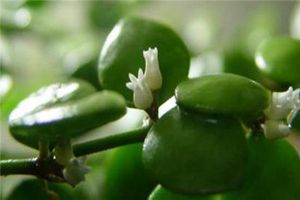
The leaf shape closely resembles a heart or a button, so it is also called Million Hearts and Button Vine, and the leaf color is bright emerald green. The stem is slender, the petiole diameter is about 1-2mm, the leaves are round, thinner at the edges and thickened in the middle, with a leathery feel, about 7-10mm in diameter, the sepals are ovate, and the corolla is white or yellow.
String of Nickels growth habits
String of Nickels is a semi-shade plant, drought-tolerant but not waterlogging-tolerant, with a suitable growth temperature of 20~30°C, and it needs a cultivation medium with good drainage and good air permeability.
String of Nickels horticultural applications
String of Nickels is a very good foliage plant. The plant has a trailing habit, can climb walls or tree trunks, and can also grow hanging down. Choosing a uniquely shaped flowerpot or pruning can give the plant different appearances, and it can also be used in floral art.
For more professional agricultural science and technology information, please scan the QR code to follow WeChat: NongXunNET

Please indicate the source when reprinting.