These alternative names for cinnamon you may not know yet
Cinnamon, you may not know it has these alternative names. Cinnamon belongs to the family Lauraceae, genus Cinnamomum. Its alternative names are Yucui (jade cinnamon), Mugui (male cinnamon), Jungui (mushroom cinnamon), Latin scientific name Cinnamomum cassia Presl. Cinnamon's place of origin: cinnamon is grown fairly widely in China, and is cultivated throughout the southeastern coastal regions, such as Guangdong, Fujian and Zhejiang, among which several cities in Guangdong are known as the hometown of Chinese cinnamon. 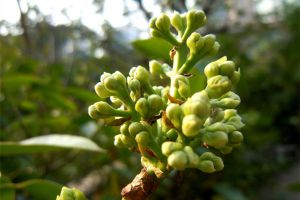
Cinnamon is an evergreen tree of the family Lauraceae. We use cinnamon often in daily life. In Chinese cooking it is frequently used when stewing meat, and has the effect of removing fishy smells, while in Western cooking its uses are even broader: cinnamon powder is often added to coffee or tea as a seasoning. Cinnamon powder tastes sweet with a slight astringency, has a faintly pungent flavor and contains a refreshing aroma.
Cinnamon family and genus
Lauraceae, genus Cinnamomum
Cinnamon alternative names
Yucui (jade cinnamon), Mugui (male cinnamon), Jungui (mushroom cinnamon), Latin scientific name Cinnamomum cassia Presl
Cinnamon's place of origin
Cinnamon is grown fairly widely in China, and is cultivated throughout the southeastern coastal regions, such as Guangdong, Fujian and Zhejiang, among which several cities in Guangdong are known as the hometown of Chinese cinnamon.
Cinnamon plant characteristics
Cinnamon is an evergreen tree of the family Lauraceae, about 12-17m tall. The bark of the cinnamon tree is grayish brown and aromatic; the leaves are long-elliptical and alternate, with slightly pointed tips, blunt bases and entire margins, green and glossy on the upper surface and grayish green on the lower surface; they feel leathery to the touch; the flowers are axillary or nearly terminal panicles, and the berries are dark purple, elliptical or obovate; the seeds are purple and long-ovate. The flowering period is generally from May to July, and the fruiting period is from February to March of the following year.
Cinnamon ecological environment
Cinnamon mostly grows in evergreen broad-leaved forests, and is generally cultivated on sand dunes or sloping hillsides. It likes warm, humid climatic conditions with plenty of sunlight; well-drained, fertile, slightly acidic red sandy soil is suitable for its growth; generally it sprouts about one month after sowing, at which point weeds should be removed promptly, a shade shed should be put up to prevent scorching sun exposure, and it is important to water frequently to keep the soil moist and prevent drought.
For more professional agricultural science and technology information, please scan the QR code to follow WeChat: NongXunNET

Please indicate the source when reprinting.