What other names does the False Aralia have? It turns out it goes by these names too
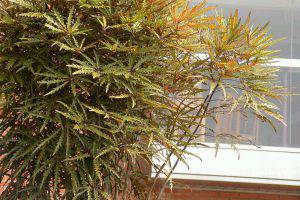
False Aralia is an evergreen foliage small tree, native to the Australia region. Its leaves resemble slender fingers, with serrated leaf edges, dark green in color, and arranged in a radial form.
Other Names for False Aralia
Hand Tree
Growth Habits of False Aralia
False Aralia prefers a warm environment with plenty of light, but it is not tolerant of direct strong light, so care should be taken to avoid strong light. In summer, provide appropriate shade; in other seasons, give it plenty of sun.
False Aralia prefers loose, fertile soil containing organic matter, and the soil must have excellent drainage.
The temperature should be kept at a certain level, kept constant, and not allowed to fluctuate up and down. In winter, it is best to keep it above 5 degrees to prevent the False Aralia from frost damage.
The Value of False Aralia
False Aralia has great medicinal value. It is also a shrub, with pungent and warm properties. Its medicinal parts are the root and bark, used in measured amounts, mostly for dispelling wind and dampness, and for relieving cough. It is also suitable for joint rheumatic pain, and can also be used for wind-cold infections.
False Aralia not only has medicinal value, but also great ornamental value. Its form is elegant, especially its leaves that grow in a radial pattern, appearing dark green or purplish-red, yet bright and vivid. It is suitable for potted cultivation indoors, or for decorating halls and venues, for ornamental purposes.
For more professional agricultural science and technology information, please scan the QR code to follow WeChat: NongXunNET

Please indicate the source when reposting.