What other names does the purple-leaf plum have? A complete guide in one article
The purple-leaf plum is a woody plant and a famous foliage variety; it has a very good planting effect and can form a beautiful scenic line. The purple-leaf plum originated in southwestern Asia and is distributed in many places in our country.
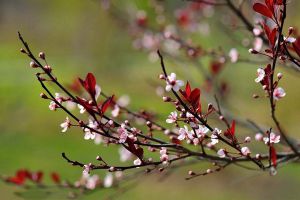
Other names of the purple-leaf plum
Red-leaf plum, purple-leaf cherry plum
Growth habits of the purple-leaf plum
The purple-leaf plum is a shrub or small tree, and it prefers to grow in a sunny, warm and humid environment; it is a plant tolerant of water and moisture. The soil for planting the purple-leaf plum needs to be fertile, deep and well-drained, and the soil should be rich in clayey neutral and acidic matter; for example, gravelly soil is a good soil for planting the purple-leaf plum.
Cultivation of the purple-leaf plum
First is cutting propagation; the cutting time is generally from late November to mid-December.
Next is management of the cuttings, with reasonable watering and appropriate ventilation, so as not to burn the young seedlings to death.
Finally, management of the transplanted seedlings: the transplanting period is in late April; choose a rainy day or after 4 p.m. on a sunny day for transplanting. When transplanting, water the seedbed sufficiently to avoid damaging the roots, and also ensure the roots carry enough soil. After lifting the seedlings, plant them immediately, water them, and take good measures against pests and diseases.
For more professional agricultural science and technology information, please scan the QR code to follow WeChat: NongXunNET

Please indicate the source when reprinting.