What are the characteristics of clover? A detailed introduction to its main features
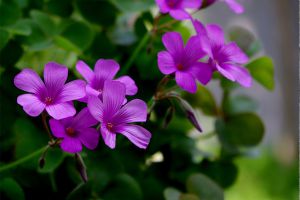
Clover Flower Language and Legends
The flower language of clover is happiness.
According to legend, whoever finds a clover with four leaflets, that is, a four-leaf clover (also called lucky clover), will gain happiness. So in some European countries, people who see clover by the roadside almost always pick it, press it flat, and keep it to give to others in the future, thereby expressing their good wishes to friends. One leaf of the four-leaf clover represents prayer, one leaf represents hope, one leaf represents love, and the last leaf represents happiness.
The legendary four-leaf clover was brought to the earth from the Garden of Eden by Eve, and its flower language is happiness. It is also called clover. It usually has only 3 leaflets, and the chance of finding a 4-leaflet one is only one in ten thousand, implying that one will gain happiness and the favor of heaven.
Morphological Characteristics of Clover
Clover is a perennial herbaceous plant. The plant is low-growing, 30-40 cm tall. It has a taproot, and the roots have the characteristic of symbiosis with rhizobia; the root's tillering ability and regeneration ability are both strong. It has many branches, and the creeping stems grow along the ground; where the internodes touch the ground they take root and sprout new buds. Compound leaves with three leaflets; the leaflets are obovate or obcordate, wedge-shaped at the base, blunt or slightly concave at the tip, with fine serrations along the margin, and a "V"-shaped white mark in the center of the leaf surface; the stipules are oval and clasp the stem. It blooms in summer and autumn, with a head-shaped raceme, spherical, with a long peduncle, and white flowers, occasionally pale red. It blooms while setting seed, the seed maturation period is uneven, and the seeds are very small.
Common Varieties of Clover
There are mainly three types of clover, namely white clover, crimson clover and red clover.
1. White clover. Also known as white trefoil. It was first cultivated in the Netherlands in the late 16th century and is now widely distributed in temperate regions. It is cultivated south of the Huai River and in southwestern China. It is a perennial herb that roots where it touches the ground. The stems are slender and soft, creeping along the ground, and the plant is 30-60 cm tall. The petioles are long, and the leaflets are obovate or nearly obcordate, with fine serrations along the leaf margin. The capitulum has 10-80 flowers, white or pale purplish red. The pod is obovate-rectangular, with 3-4 seeds per pod. The seeds are nearly round and yellow, with a 1000-seed weight of 0.5-0.7 g.
2. Crimson clover. Also known as crimson trefoil. It originated in Europe and is distributed in northeastern Europe and North America. It has been widely introduced and cultivated in northern Huai and south of the Yangtze River in China. It can be used as forage, ground cover vegetation or green manure, and can also be used as a catch crop. It is an annual or overwintering herbaceous plant. The stem is round and hollow, about 70 cm tall. The leaves are nearly round, with short hairs on both sides; the petioles are large, and the stipules are round and large, membranous. The capitulum is cylindrical, and the flowers are deep red. The pod is obovate and contains 1 seed. The seeds are round, yellow or brown, with a 1000-seed weight of 3.2 g.
3. Red clover. Also known as red trefoil. It is distributed in Europe, the United States, New Zealand and other regions, and is also cultivated south of the Huai River in China. The stem is upright or ascending, round with uneven longitudinal ridges, 60-100 cm tall. The leaflets have a pale white V-shaped marking, the leaf surface is hairy, and the margin is entire. The capitulum has more than 100 flowers, red-purple, and is self-infertile. The pod is obovate, the pericarp is membranous, and each pod contains 1 seed. The seeds are kidney-shaped or nearly triangular, yellowish brown, with a 1000-seed weight of about 1.5 g.
Value and Applications of Clover
Lawns established with grass-family turfgrass species have become a limiting condition for the development of the turf industry due to frequent mowing and large watering amounts, while establishing lawns with white clover can overcome these shortcomings. The advantages of establishing lawns with white clover are:
(1) No mowing required, low management intensity. The stems of white clover are creeping stems, and the plant is low-growing, generally 10-20 cm tall. Therefore, the established lawn does not need to be mowed.
(2) Fewer waterings and relatively extensive management. White clover has a well-developed root system and can use water from deep soil layers, and it is not very strict about soil dryness and moisture. Therefore, the number of waterings can be reduced, and management can be extensive.
(3) Natural renewal and a long-lasting lawn. White clover does not need mowing, so the plant can flower and set seed. The seeds fall to the ground and grow on their own, allowing natural renewal and making the lawn long-lasting.
(4) Strong invasiveness and relatively good ornamental value. The creeping stems of white clover spread in all directions, and they take root at the nodes; when the mother plant dies or the stem is cut, the creeping stems can form new independent clumps. Therefore, it has strong invasiveness. Clover is a broadleaf plant, and its leaves extend horizontally, which can effectively cover the ground and inhibit weed growth. Therefore, once a white clover lawn is established, weeds are not easy to invade, which can make the lawn neat and beautiful.
Origin and Distribution of Clover
Clover originated in southern Asia Minor and southeastern Europe. It is widely distributed in temperate and subtropical high-altitude areas. In China, it can be planted in all regions except South China.
Growth Habits of Clover
Clover has strong cold resistance. When the temperature drops to 0°C, some old leaves turn yellow, and the small leaves on the main root cling close to the ground and stop growing, but they still remain green. Therefore, the green period is very long. It is not strict about soil requirements and can adapt to various soil types, growing well on slightly acidic soil. It prefers warm, sunny and well-drained environmental conditions. Under drought conditions, growth is slow, and some plants die off in the hot season. It is tolerant of pruning and trampling, has strong regeneration ability, and can grow new small leaves within 10 d after pruning. After high-intensity trampling or rolling, it can recover in 3-5 d. Under strong shading, it is prone to leggy growth, resulting in poor growth. It has strong resistance to harmful gas pollution and strong resistance to pests and diseases.
For more professional agricultural science and technology information, please scan the QR code to follow WeChat: NongXunNET

Please indicate the source when reprinting.