What are the other names for the silk tree flower? A detailed explanation of the silk tree flower's name
The symbolism of the silk tree is very beautiful. The ancients often gave silk tree flowers to others, which could dispel resentment and restore goodwill. It is a flower that brings people good blessings. Today we will get to know this plant, hoping to bring good blessings to flower lovers.
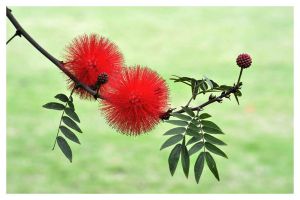
Genus and family of the silk tree flower
The silk tree flower is a deciduous tree in the genus Albizia, family Fabaceae.
Other names for the silk tree flower
The silk tree flower is also called night silk tree, night silk tree, velvet flower tree, bird velvet tree, and bitter love flower.
Origin of the silk tree flower
The silk tree flower comes from the provinces and cities of China from the Northeast to South China and the Southwest, and generally grows on hillsides.
It is distributed in Africa and from Central Asia to East Asia, and is also cultivated in North America.
Morphological characteristics of the silk tree flower
The silk tree is a deciduous tree that can reach a height of 16 m, with a spreading crown, angular branchlets, and young branches, inflorescences, and leaf rachises covered with tomentum or short pubescence. Stipules are linear-lanceolate, leaves are small, and fall early.
The capitula are arranged in panicles at the top of the branches; the flowers are pink; the calyx is tubular, 3 mm long; the corolla is 8 mm long, with triangular lobes 1.5 mm long, and both the calyx and corolla are externally covered with short pubescence; the filaments are 2.5 cm long.
The pod is strap-shaped, 9-15 cm long and 1.5-2.5 cm wide, with pubescence on young pods and no hair on old pods.
The flowering period of the silk tree flower is from June to July; the fruiting period is from August to October.
For more professional agricultural science and technology information, please scan the QR code to follow WeChat: NongXunNET

Please indicate the source when reprinting.