Why can't you grow flowers without sand? This is the reason
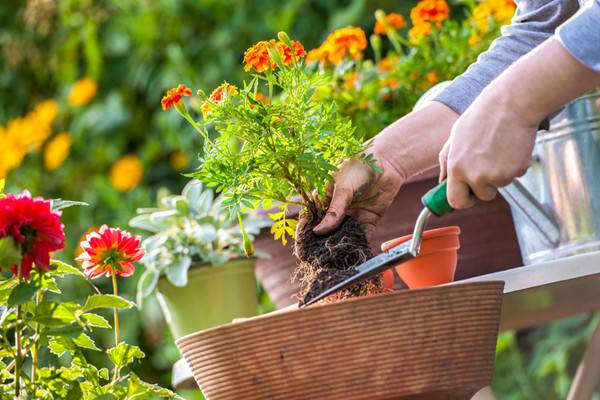
Fine sand has good water retention and is suitable for cuttings
Why fine sand has good water retention
Water retention of fine sand
Sand with a particle size of 0.25-0.35mm is fine sand.
Fine sand is very delicate. After it is mixed with other soil, the fine sand clogs the gaps in other media, which reduces water permeability and increases water retention. Pure fine sand can be used for cuttings of various plants such as herbaceous plants and succulents.
Propagation by cuttings in pure fine sand (taking rose cuttings as an example)
1. Choose good branches; they must be healthy branches that root easily. Soak them in carbendazim for one hour, then take them out and let them dry.
2. Sift the prepared river sand with a sieve. You can choose a sieve with a mesh size of about 0.35, so the sand sifted out is standard fine sand.
3. Disinfect. You can put the sand under the sun to bake, put it in a microwave to "ding" it for a moment, or steam it in a pressure cooker. In addition, you can also pour boiling hot water onto the soil to disinfect it.
4. Put the fine sand into the prepared container and sprinkle water on it.
The container can be homemade. Because seedling trays have holes in the bottom, they leak sand very easily, so they are not recommended. You can use a plastic biscuit box left over from snacks, a disposable cup, or a finished drink bottle (preferably with a flat bottom), and score a few slits in the bottom; do not punch holes.
Next, take a disposable cup as an example.
5. Prepare a vessel that can hold water, such as an unused plate or tray. It is best that the vessel is not too deep.
6. Insert the prepared branches into the disposable paper cup, then place the disposable paper cup into the vessel, and fill the vessel with water.
7. Next, just keep the water in the vessel, and then slowly wait for the rose to take root.
Coarse sand has good water permeability and is suitable for soil mixing
Why coarse sand has good water permeability
Water permeability of coarse sand
Sand larger than 0.5mm is called coarse sand.
Because coarse sand has larger particles, after it is mixed with soil such as peat soil, it forms more gaps, so its water permeability is relatively good. It is generally used as one of the ingredients in plant soil mixes.
Succulent soil mix
2 parts peat soil\coconut coir, 0.5 part perlite, 2 parts vermiculite, 0.5 part river sand (akadama or orchid stone); stir evenly.
Succulents generally like loose and fertile soil. Clever use of sand when preparing soil can prevent succulents from being affected by waterlogging.
Herbaceous flower soil mix
Garden soil + compost + river sand + plant ash; the ratio can be 4:4:2:1.
This formula also incorporates the coarse sand from river sand. Because coarse sand has good water permeability, this soil mix is suitable for ordinary potted herbaceous flowers, such as poinsettia, chrysanthemum, wax begonia, asparagus fern, cineraria, and geranium.
Foliage plant soil mix
4 parts leaf mold, 4 parts garden soil, 2 parts river sand.
Large plant soil mix
6 parts garden soil, 2 parts decomposed organic fertilizer, 2 parts coarse sand.
Large plants are more prone to waterlogging, so coarse sand plays a role in drainage, reducing the probability of waterlogging.