It turns out that the jelly bean plant (Sedum rubrotinctum) also has nicknames - do you know what they are?
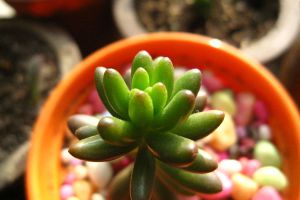
Common names of the jelly bean plant
The jelly bean plant is commonly known as Christmas Cheer and earring grass.
Habits of the jelly bean plant
The jelly bean plant is a succulent in the Crassulaceae family, Sedum genus, and spring and summer are its peak growing seasons.
The jelly bean plant originates from Mexico and likes a warm environment with ample sunlight, with the most suitable temperature being 13~18°C. It is cold-tolerant, and can safely overwinter when the winter temperature stays above 5°C.
The jelly bean plant is drought-tolerant and afraid of excessive moisture; during the growing period, water once every 2 weeks and keep the potting soil slightly moist.
The jelly bean plant is a full-sun plant and can take appropriate direct sunlight. In sunlight, the leaves are green in the middle with pale red tips, turning reddish-brown when the sunlight is stronger.
Common propagation methods for the jelly bean plant: seed sowing and cuttings.
Care tips for the jelly bean plant
Spring: Every spring is the best time to repot the jelly bean plant; use a mix of fertile garden soil and coarse sand, adding a small amount of leaf mold and bone meal. While repotting, prune the plant. The jelly bean plant drops leaves very easily, so be gentle during repotting, but the dropped leaves can be placed directly in the pot and will soon grow into new plants.
Summer: Summer has high temperatures and strong light, so appropriate shading is needed; the fleshy leaves will turn from green to reddish-brown. However, the shading period should not be too long, otherwise the stems and leaves become tender and prone to falling over.
Autumn: Place the jelly bean plant in a spot with ample sunlight for care, keep the temperature within the suitable range, and ensure frequent ventilation.
Winter: Keep the room temperature above 5°C, with 10°C being best; reduce watering and keep the potting soil slightly dry.
Propagation methods for the jelly bean plant
Sowing: From 2~5 months, select mature seeds and sow them indoors in pots, keeping the room temperature at 18~21°C; they will sprout in 12~15 days.
Cuttings: Can be done all year round and root very easily, with spring and autumn being the most suitable. Cut the top leaves or compact short branches for cuttings; leaves that drop off normally can also be directly used for cuttings.
Suggested planting combinations: Crassula ovata 'Gollum' (tube-leaf jade) and Crassula capitella 'Campfire'.
For more professional agricultural science and technology news, please scan the QR code to follow WeChat: NongXunNET

Please indicate the source when reprinting.