In what environment does glossy privet grow best?
Glossy privet is graceful in all four seasons, with spread-out branches and dense foliage, and a neat tree shape, making it a commonly used ornamental tree species in gardens. Because of its strong adaptability, fast growth, tolerance to pruning, and easy propagation from seed, it is also a good choice for home potting.
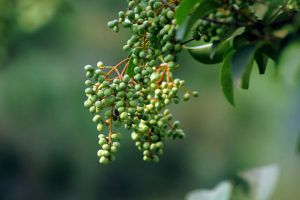
Other names for glossy privet
Pointed-leaf privet, also called white wax tree, wintergreen, wax tree, nuzhen, zhenmu, and general tree.
Growth habits of glossy privet
Glossy privet has good cold tolerance, tolerates waterlogging, and prefers a warm, humid climate; it likes light and tolerates shade. It is a deep-rooted tree species with well-developed fibrous roots, fast growth, strong sprouting ability, and tolerance to pruning, but it does not tolerate poor, thin soil.
It has strong resistance to air pollution, has strong resistance to sulfur dioxide, chlorine gas, hydrogen fluoride, and lead vapor, and can also tolerate relatively high dust and smoke pollution.
It is not strict about climate requirements and can withstand low temperatures of -12°C, but it is suitable for planting in moist, wind-sheltered, sunny places, especially growing well in deep, fertile soil with high humus content.
Flower language of glossy privet
The fruit of glossy privet has the characteristic of not falling from the branches throughout the entire winter. When birds have no feed and are suffering from hunger, the fruit of the wintergreen tree can just sustain life. Therefore, the flower language of the wintergreen tree is life.
Value of glossy privet
Ornamental value: glossy privet can be planted alone or in groups in courtyards, and can also be used as a street tree. Because of its strong adaptability, fast growth, and tolerance to pruning, it is also used as a hedge. Generally, after 3 to 4 years it can take shape and achieve a screening effect.
Medicinal value: after glossy privet leaves are soaked for 24 hours, fragrant wintergreen oil can be extracted by distillation, and it is often added to sweets and toothpaste.
Common varieties of glossy privet
1. Tall-stem glossy privet / wintergreen tree
It is an evergreen large shrub or tree, with grayish-brown bark that is smooth and not cracked. The leaves are 8-12 cm long, leathery and glossy, green through the winter, and have the function of retaining dust and resisting smoke. It can absorb sulfur dioxide and is suitable for factory, mining, and urban greening. It is one of the rare northern evergreen broad-leaved tree species.
2. Large-leaf glossy privet (large-leaf glossy privet ball / large-leaf glossy privet tree / Dafeng large-leaf glossy privet base variety)
Deciduous or semi-evergreen shrub, with spreading branches and short pubescence on the branchlets. Leaves thinly leathery, elliptic to obovate-oblong, hairless, apex blunt, base wedge-shaped, entire, margins slightly recurved outward; petioles have short pubescence. Panicles; flowers white, fragrant, sessile, corolla lobes equal in length to the tube; anthers exceeding the corolla lobes. Drupe elliptic, purple-black. Flowering period July--August.
3. Golden-leaf glossy privet (golden-leaf glossy privet ball / golden-leaf glossy privet tree / tall-stem golden-leaf glossy privet)
Golden-leaf glossy privet has golden-yellow leaves, and the color is even more brilliant and beautiful especially in spring and autumn. Golden-leaf glossy privet likes light, has poor shade tolerance, medium cold resistance, and strong adaptability. It is not strict about soil requirements, but loose, fertile, well-aerated sandy loam is best. It is used for forming characters or patterns in green squares and plazas, and can also be used for decorating small courtyards.
4. Red-leaf glossy privet (purple-leaf glossy privet)
Evergreen small tree, with opposite simple leaves, branchlets slightly pubescent, leaves ovate, ovate-round to ovate-elliptic, thinly leathery. The leaf shape is very similar to that of small-leaf glossy privet, with stronger sprouting ability, relatively fast growth, and vigorous growth. Its new shoots and young leaves are purplish-red, and against the contrast of old leaves they appear even more vivid and dazzling. If pruned several times, the new branches become dense, and the entire crown appears purplish-red, making it even more showy and striking among groups of green plants. After entering winter, the whole plant then appears purple-black, making it even more conspicuous among all things.
5. Variegated glossy privet
Deciduous or semi-evergreen shrub, with spreading branches and short pubescence on the branchlets. Leaves thinly leathery, elliptic to obovate-oblong, hairless, apex blunt, base wedge-shaped, entire, margins slightly recurved outward; petioles have short pubescence. Panicles; flowers white, fragrant, sessile, corolla lobes equal in length to the tube; anthers exceeding the corolla lobes. Drupe elliptic, purple-black. Flowering period July--August.
6. Red-fruit glossy privet (red-fruit wintergreen)
Distributed in the high-cold region of the Luoxiao Mountains at 1500 m, evergreen shrub or small tree, 5-7 m tall, young branches and pedicels purplish-red, leaves elliptic, 6-8 cm long, 3-4 cm wide, light purplish-red. In areas of Beijing with good microclimate, it can be cultivated completely in the open field, and can resist sulfur dioxide, chlorine gas, and hydrogen oxide. It grows normally in slightly alkaline soil with a PH value of 8-9.
For more professional agricultural science and technology information, please scan the QR code to follow WeChat: NongXunNET

Please indicate the source when reprinting.