How to Grow and Care for the Fairy Primrose (Primula malacoides)
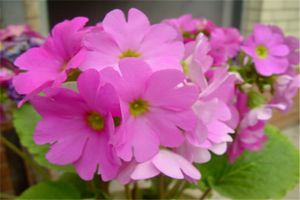
Introduction to the Fairy Primrose
[Common names] Fairy primrose, Primula obconica, Xianhe lotus
[Classification] Primulaceae, Primula
[Origin] Native to western China, now widely cultivated.
[Habits] Likes light but fears strong sunlight; intolerant of heat; prefers acidic, fertile leaf mould.
Morphological Characteristics of the Fairy Primrose
The fairy primrose is a perennial herb with a short stem, about 30 cm tall, brown in colour. It has many fibrous roots. The leaves are basal, oblong to ovate, with long stalks and shallow notches along the edges; the leaf surface is smooth, while the underside is densely covered with white soft hairs and often bears an irritating, toxic secretion. The flowering scape is drawn out from the leaf cluster, and the umbel is relatively large; the calyx is funnel-shaped and the corolla red. There are many cultivated varieties with bright colours, including white, magenta, purplish red, blue, pale red and pale purple. The seeds are tiny and turn brown when mature.
Varieties of the Fairy Primrose
The varieties of the fairy primrose include the large-flowered variety, the deep red-flowered variety and the white-flowered variety, and among cultivated varieties there are also double-flowered forms. Other commonly grown plants of the same genus used as pot plants include Primula tibetica, Primula malacoides, Primula floribunda, Primula vulgaris and Primula kewensis.
The genus Primula contains more than about 450 species, mainly distributed in the Northern Hemisphere; China produces about 390 species, chiefly in the west and southwest, especially in cool, humid areas of low latitude and high altitude, and most species have large, brightly coloured flowers.
Habits of the Fairy Primrose
It likes cool, humid conditions and dislikes scorching sun; it tolerates fertiliser but not cold. The optimum growing temperature is 13-18°C, and a sandy loam rich in humus is most suitable. Depending on temperature, it can complete its growth in 110-140 days.
The flowering room temperature for the fairy primrose is 10-15°C. Unlike other primroses, it does not require low temperatures, but suitably low temperatures can make the plant grow robustly and keep its form compact, while also increasing the number of flowering branches. After entering the flowering period, appropriately increase the concentration of phosphorus and potassium fertiliser, generally using a 15-10-30 fertiliser at 200 ppm. After the flowering period, pay attention to pruning the faded flowering branches to prevent the occurrence of grey mould.
Uses of the Fairy Primrose
The fairy primrose and other kinds of primrose are important indoor potted flowers, widely cultivated around the world. The fairy primrose is an important pot flower for decorating rooms in winter and spring. It usually flowers from December to April of the following year.
It can also be used as a cut flower. The whole plant is used medicinally to clear heat and remove toxins.
Note that the leaf glandular hairs of the fairy primrose contain primin, to which some people are easily allergic. Rubbing the hands with alcohol before contact and washing with soapy water after contact can provide protection. It is reported that varieties free of primin have already been bred abroad.
For more professional agricultural science and technology information, please scan the QR code to follow WeChat: NongXunNET

Please indicate the source when reprinting.