What Makes Vervain Special? A Full Breakdown of Its Unique Characteristics
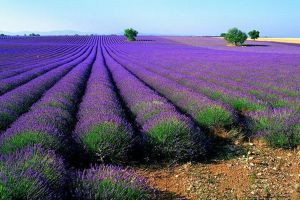
Vervain has elegant flower colors; its purple blooms look very beautiful in the fields. Vervain can create a purple sea of flowers. It not only has extremely high ornamental value, but also carries many symbolic meanings. In Christianity it is regarded as a sacred flower, and legend says it has the power to break spells.
Other Names for Vervain
Purple-topped dragon's tooth grass, wild catnip, dragon's tooth grass, phoenix-neck grass, dragonfly grass, blood-staunching grass, swallowtail grass; Latin scientific name HerbaVerbenaeOfficinalis
Vervain Family and Genus
Verbenaceae
Vervain Distribution Region
Southwest China, Shanxi, Shaanxi, Gansu, Xinjiang, Jiangsu, Anhui, Zhejiang, Jiangxi, Fujian
Vervain Morphological Characteristics
Vervain is a perennial herbaceous plant. Because its whip-like sheath is spike-shaped, it is also called vervain. The stem of vervain is square, square in the upper part and nearly round in the lower part, with short stiff hairs on the ridges and nodes. The leaves are simple and opposite, ovate, with deep divisions similar to chicken claws; the lobes show irregular pinnate splitting. Both the upper and lower surfaces of the leaves are covered with stiff hairs, and the hairs on the veins of the lower surface are especially dense.
The flowers of vervain are blue-purple spike-shaped inflorescences, generally opening in summer and autumn; the calyx is membranous and tubular, with the tip divided into 5 lobes like a chicken claw; the fruit of vervain is enclosed within the calyx and splits open into 4 small nutlets when mature; the flowering period of vervain is 7-8 months, and the fruiting period is 10-11 months.
Vervain Growth Habits
Vervain likes fertilizer and can grow in ordinary soil, but grows robustly in deep, fertile sandy loam; low-lying, easily waterlogged land is not suitable for planting. Vervain likes a humid environment but is afraid of waterlogging, so when watering, avoid water accumulating in the pot. Choose loam or sandy loam with a relatively thick soil layer as the planting site. Sow in late 4 month to early 5 month. Prevent weeds and keep the field free of weeds. Long periods of heavy water accumulation in the field can cause root rot; as long as drainage is timely and the soil is loosened, it can be avoided.
Vervain Flower Language
Justice and expectation. White vervain symbolizes purity and innocence, and the expectation that one's love will return. Red vervain symbolizes working together with one heart and a harmonious family in which all undertakings prosper.
Vervain Symbolic Meaning
Vervain is regarded as a sacred flower in Christianity. In medieval legend it had the effect of breaking spells, and it was often used to decorate altars of religious significance. In many literary and artistic works there are descriptions of vervain restraining vampires.
Vervain Forecasts the Weather
Wild vervain can forecast the weather. Vervain is very sensitive to humidity; when the roots exposed outside the soil become moldy and whitish, it indicates rain.
For more professional agricultural science and technology information, please scan the QR code to follow WeChat: NongXunNET

Please indicate the source when reprinting.