What other names does the Pagoda Plant have? You may not know these names
The Pagoda Plant is a perennial succulent herbaceous plant, also called a succulent plant. The short plant grows in clumps, only 5-8 cm tall, growing upright and sometimes also trailing. Its leaf shape and color are quite beautiful, giving it a certain ornamental value; potted plants can be placed next to TVs and computers to absorb radiation, and can also be planted indoors to absorb substances such as formaldehyde and purify the air.
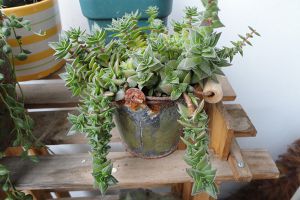
Growing Habits of the Pagoda Plant
Native to South Africa. It likes a warm, dry, and sunny environment. It is not cold-hardy, tolerates drought and partial shade. It fears intense direct sunlight and waterlogged conditions.
Favorite temperature: 18-24°C
Watering: once a week during the growing season
Light: full sun
Propagation: seeding, cuttings, division
Pests and diseases: leaf spot, scale insects
Combination suggestions: Echeveria 'Hatsune', Cotyledon tomentosa
Care Tips for the Pagoda Plant
Watering: keep the potting soil moist in spring and autumn, watering once a week.
Fertilizing: fertilize once every half month or use "Huiyou" 15-15-30 special fertilizer for potted flowers. However, the amount of fertilizer should not be too much, otherwise the stems and leaves will grow leggy and the stem nodes will elongate, seriously affecting the ornamental value.
Temperature: provide appropriate shade during high temperatures and strong light in summer, but not for too long, otherwise it will affect the leaf color and gloss. Keep the indoor temperature at 10-12°C in winter, and it can continue to grow.
Propagation Methods of the Pagoda Plant
Seeding: sow indoors in pots from April to May. The suitable germination temperature is 20-22°C. Seeds germinate 10-12 days after sowing, and the seedlings grow relatively quickly.
Cuttings: carried out from May to June. Cut plump tip branches and insert them into a sand bed. They root about 15-21 days after insertion.
Division: carried out when repotting in spring. Separate the densely growing stems and leaves, and it is best to plant 3-4 branches as one clump per pot.
For more professional agricultural science and technology information, please scan the QR code to follow WeChat: NongXunNET

Please indicate the source when reprinting.