What other names does Huayueye have? Learn about its common names
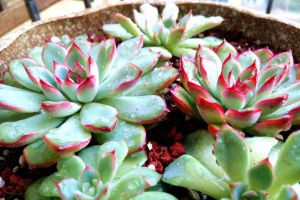
Common names of Huayueye
Huayueye is commonly known as red-edged Echeveria.
Habits of Huayueye
Huayueye is a succulent in the Crassulaceae family, Echeveria genus, and spring and autumn are its peak growing seasons.
Huayueye is native to Mexico and prefers a warm, dry environment with plenty of sunlight. Its most suitable growing temperature is 18~25°C. It is not cold-tolerant, tolerates drought and partial shade, and can receive sunlight all day.
Common propagation methods for Huayueye: cuttings and sowing.
Care tips for Huayueye
Repotting: Repot every spring, replace the soil when repotting, use a mix of peat and coarse sand, and add a small amount of bone meal or organic fertilizer to the soil as a base fertilizer.
Watering: During the growing season, water 1 time per week, and never let the potting soil become too wet; in winter, water 1 time every 2~3 weeks and keep the potting soil dry. During care, if the indoor air is dry, spray in time to increase air humidity. Be careful not to sprinkle water directly on the leaf surface, so that water does not accumulate in the leaf rosette and cause rot.
Fertilizing: Fertilize once a month during the growing season, using diluted cake fertilizer water or special succulent fertilizer, and be careful not to splash it on the leaf surface when fertilizing.
Pests and diseases: In a hot and humid environment, many root-knot nematodes appear on the roots of Huayueye. Once discovered, immediately drench the roots with a fungicide. If the pest infestation is severe, directly repot, change the soil, and replant.
Propagation methods for Huayueye
Sowing: Select mature and plump seeds for sowing, control the temperature at 16~19°C, and they will germinate after 2~3 weeks.
Cuttings: In late spring, cut off mature leaves and insert them into a sand bed; they will root after 3 weeks, and after young plants grow, plant them in pots. Of course, top-stem cuttings can also be used: remove the stem from the center of the plant for cuttings, leaving the basal leaf rosette, so that more offsets can sprout.
Suggested planting combinations: Echeveria derenbergii, Echeveria chihuahuaensis.
For more professional agricultural science and technology information, please scan the QR code to follow WeChat: NongXunNET

Please indicate the source when reposting.