How adaptable is the Croton really? Find out in one article
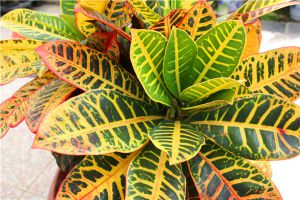
Croton, namely the Croton plant; just from the name, it is a foliage plant with very beautiful leaves. And that is indeed the case: it attracts people's attention with its varied leaf forms.
Other names for Croton
Croton generally refers to the Croton plant, also commonly known as: variegated laurel.
Morphological features of Croton
Leaves are leathery, with bright, glossy colors. The leaves contain anthocyanins, appearing in single colors or in green, yellow, white, orange, red, pink, scarlet, and purple, with various colors mixed together.
Croton is named for the shape and color of its leaves. Its leaf shapes include lanceolate, ovate, and elliptical, as well as wavy and twisted forms, and so on. Its leaf colors include bright green, white, gray, red, pale red, dark red, purple, yellow, yellow-red, and so on.
Uses of Croton
Croton has densely growing branches and leaves and is a well-known foliage tree species. It is a common potted plant in the north, used to decorate desks and to furnish meeting venues and halls.
Although Croton is attractive, its milky sap is toxic. If swallowed by mistake, symptoms such as abdominal pain and diarrhea may occur. Therefore, extra care should be taken when viewing it.
For more professional agricultural science and technology information, please scan the QR code to follow WeChat: NongXunNET

Please indicate the source when reposting.