How much do you know about the growth habits of Haworthia cooperi?
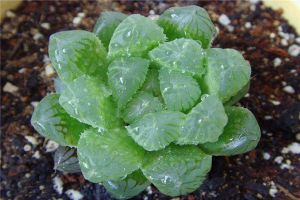
The living habits of Haworthia cooperi
Haworthia cooperi is native to South Africa. It prefers a warm, dry environment with bright light. It is not cold-tolerant, fears high temperatures and strong light, and is not tolerant of wet conditions.
Favorite temperature: 18-22°C
Watering: water sparingly in midsummer
Light: bright light
Propagation: seeding, division, cuttings
Pests and diseases: root rot, anthracnose
Combination suggestions: Huoji (Crassula capitella 'Campfire'), Hongzhiyu (Sedum rubrotinctum)
Care tips for Haworthia cooperi
Repot every spring, clearing away the shriveled dead leaves under the leaf rosette and overly long fibrous roots. Use a mixed soil of peat soil, potting soil and coarse sand for the pot, adding a small amount of bone meal. During the growing season, keep the potting soil slightly moist; in summer when temperatures are high, the plant enters a semi-dormant state, so provide appropriate shade, water less, and keep the potting soil dry. In autumn when the leaves resume growth, keep the potting soil moist. In winter, strictly control watering. During the growing season, fertilize once a month with diluted cake fertilizer water or "Huiyou" 15-15-30 special fertilizer for potted flowers.
Propagation methods of Haworthia cooperi
Seeding: sow indoors in pots in spring, with an optimal germination temperature of 21-24°C; germination occurs two weeks after sowing.
Division: can be done throughout the year, usually in spring during repotting in April-May, separating the young plants around the mother plant and potting them up. Cuttings: carried out in May-June, mainly leaf cuttings. Cut off the leaves, let them dry slightly, then insert them for rooting.
For more professional agricultural science and technology information, please scan the QR code to follow WeChat: NongXunNET

Please indicate the source when reprinting.