What other names does columbine have? It turns out it also goes by these names
Columbine, if you have seen its flowers, you will surely be conquered by their beauty. It would really be a pity not to grow one or two of these beautiful flowers!
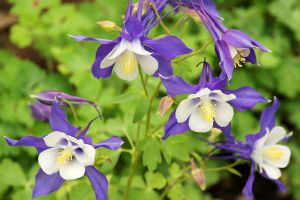
Morphological characteristics of columbine
Columbine is a plant in the buttercup family (Ranunculaceae) that bears beautiful flowers. It is a perennial herbaceous plant with a relatively thick, branched root. The leaves of columbine are very glossy, with fine hairs on the underside. Columbine generally blooms in June or July, producing blue, purple or other colored flowers; the anthers are yellow, and it has medicinal value.
Distribution of columbine
Columbine is highly adaptable and suitable for growing in mountainous areas, by riversides, or in relatively moist places. It is distributed in many parts of our country, including the North China and Northeast China regions, as well as Shaanxi, Gansu, Qinghai and other places.
Main value of columbine
The flowers of columbine are very beautiful, delicate and charming, and the flower colors are also very lovely, giving it excellent ornamental value. Columbine can be grown on lawns or in dense woods, and is also suitable for growing in low-lying areas and by streams. It is also well used when arranging flower borders, flower beds or rock gardens. In addition, the flowers of columbine can also be used as cut flowers.
For more professional agricultural science and technology information, please scan the QR code to follow WeChat: NongXunNET

Please indicate the source when reprinting.