What other names does the garden balsam have? Let us introduce you to this common flower
The garden balsam, also known as nail flower, impatient plant, and so on, is an herbaceous plant in the Balsaminaceae family. Because its flower head, wings, tail, and feet all curl upward like a phoenix, it is also called the golden phoenix flower. The leaves of the garden balsam are rich and vivid in color, and are deeply loved by girls.
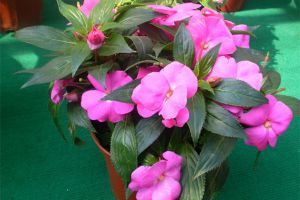
Other names of the garden balsam
Nail flower, impatient plant, daughter flower, golden phoenix flower, garden balsam stem
Morphological characteristics of the garden balsam
An annual herb, 60-100 cm tall. The stem is stout, fleshy, upright, unbranched or branched, hairless or sparsely pubescent when young, with a base diameter of up to 8 mm, bearing many fibrous roots, and the lower nodes are often swollen.
Growth habits of the garden balsam
The garden balsam likes sunlight, fears moisture, and tolerates heat but not cold. It prefers sunny terrain and loose, fertile soil, and can also grow in relatively poor soil.
It is native to China and India. It is widely cultivated in gardens throughout China and is a common ornamental flower.
Main values of the garden balsam
Medicinal: The roots, leaves, and seeds of the garden balsam are all treasures. The root is the traditional Chinese medicinal material known as garden balsam stem.
Food: The leaves of the garden balsam can be blanched and served as a cold dish, and the seeds can be used as a seasoning for soup, making it very delicious.
Ornamental: The flowers of the garden balsam are brightly colored and make it a very beautiful flowering plant.
Varieties of the garden balsam
According to ancient flower records, there were more than 200 varieties of garden balsam, and many varieties have now been lost. Because the garden balsam readily mutates, some good varieties have been produced through artificial cultivation and selection, such as the five-colored top balsam, whose flowers grow at the top of the stem and are large and brightly colored, as well as the ten-pattern brocade, and others. According to different flower shapes, they can also be divided into rose type, camellia type, dianthus type, and so on.
The flower language of the garden balsam
Do not touch me, which comes from its English alias Touch me not, and in American English Don't touch me, because its seed pods will shoot out many seeds at the slightest touch.
For more professional agricultural science and technology information, please scan the QR code to follow WeChat: NongXunNET

Please indicate the source when reprinting.