Introduction to Lavender: A Complete Guide to This Aromatic Plant
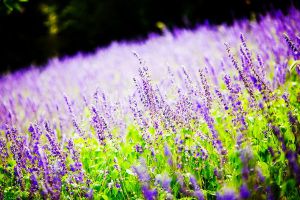
Native to the Mediterranean coast, various parts of Europe and the islands of Oceania, it was later widely cultivated in the United Kingdom and Yugoslavia. Its leaf shape and flower color are elegant and graceful, and its blue-purple inflorescence is tall and beautiful, making it a new perennial cold-hardy flower for courtyards.
Lavender's Alternative Names
Lingxiangcao, Xiangcao, Huangxiangcao
Lavender's Growth Habits
Lavender's Temperature Requirements
Lavender has strong adaptability. Mature plants tolerate both low and high temperatures, and during the harvest season they can withstand high temperatures of around 40°C. In the Huanglong area of Shaanxi, lavender plants overwinter safely in the open ground at -21°C; in the Xinjiang region, with soil mounding treatment and snow cover, they can withstand low temperatures of -37°C, and seedlings can tolerate low temperatures of -10°C. During the growth and development process of lavender in the following year, when the average temperature is around 8°C, it begins to sprout and needs 10-15d; when the average temperature is 12-15°C, the plant branches begin to turn green and elongate, requiring 20d; when the average temperature is 16-18°C, it begins to form buds, requiring 25-30d; when the average temperature is 20-22°C, it begins to bloom; when the average temperature is 26-32°C, it is the seed-setting stage.
Lavender's Water Requirements
Lavender is a plant that prefers dryness and does not store much water, and an annual rainfall of 600-800mm is more suitable. During the green-up stage and bud stage, the plant grows relatively fast and needs more water; during the flowering stage it needs less water; during the seed-setting stage the water amount should be moderate; during the winter dormant period, winter irrigation or snow cover is needed. Therefore, the ideal rainfall distribution throughout the year is abundant in spring, moderate in summer, and sufficient snow in winter.
Lavender's Sunlight Requirements
Lavender is a long-day plant, requiring sufficient sunlight during its growth and development period, with an annual sunshine duration requirement of more than 2000h. In a damp and shady environment, the plant grows slowly or ages relatively quickly, and develops poorly.
Lavender's Soil Requirements
Lavender has a relatively well-developed root system and prefers deep, loose, well-aerated fertile soil rich in silicon and calcium. Strongly acidic or alkaline soil with heavy clay, poor drainage, and plots with a high groundwater table are all unsuitable for planting.
Lavender's Flower Language
In European tradition, lavender seems to be naturally related to love, and a large number of love legends or folk customs involve lavender. "Lavender Represents True Love" is the most representative lyric poem of the Elizabethan era. Lavender's flower language is "waiting for love," just as portrayed in the TV drama "Lavender": lavender signifies a subtle expression of love, a firm promise, and after enduring hardships, finally being able to hold hands with the one you love. Lavender is considered by people to be one of the important tools for driving away unclean things and for incense.
For more professional agricultural science and technology information, please scan the QR code to follow WeChat: NongXunNET

Please indicate the source when reprinting.