Is Winter Jasmine Easy to Grow? A Full Guide to Care Difficulty and Methods
Winter jasmine is a deciduous shrub-forming woody plant, with alternative names such as "golden belt", "Qingming flower" and "little yellow flower". It is a common flower in China, and together with camellia, plum blossom and narcissus it is known as one of the "Four Friends in the Snow".
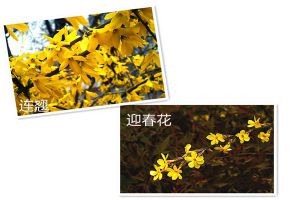
Alternative names of winter jasmine
Winter jasmine has alternative names such as "golden belt", "Qingming flower" and "little yellow flower", and together with camellia, plum blossom and narcissus it is known as one of the "Four Friends in the Snow".
Morphological characteristics of winter jasmine
Winter jasmine originates from northwestern China in Shaanxi, Gansu and Sichuan, and southeastern Tibet. Today it is widely cultivated around the world at altitudes of about 800-2000 m.
Winter jasmine stems are both upright and creeping; the larger ones are mostly about 0.3-5 m tall, with drooping, slightly twisted branches that are smooth and hairless on the surface.
Winter jasmine leaves are opposite, with compound leaves, while small branches often bear single leaves; the leaf surface is hairless and (long) ovate or (narrowly) elliptical, and some are nearly round.
Winter jasmine flowers mostly grow in the leaf axils of small branches, with a few at the tips of small branches. The bracts are small leaf-like, lanceolate, elliptical or ovate, and the corolla is usually yellow, opening before the leaves appear; the flowering period is generally from February to April each year.
Growth habits of winter jasmine
Winter jasmine likes sunlight and can also grow in semi-shaded environments.
In terms of temperature, it is not tolerant of severe cold and can only overwinter safely under relatively warm and humid climate conditions.
Winter jasmine is rather afraid of waterlogging, so it should be grown in loose, well-drained, fertile sandy soil. In terms of acidity and alkalinity, it prefers acid and avoids alkaline.
Flower language of winter jasmine
Winter jasmine has the beautiful meaning of "loving each other forever", and also symbolizes "tenacious vitality".
For more professional agricultural science and technology information, please scan the QR code to follow WeChat: NongXunNET

Please indicate the source when reprinting.