What Is the Common Name of the Axe-Leaf Peperomia? Explained Clearly in One Article
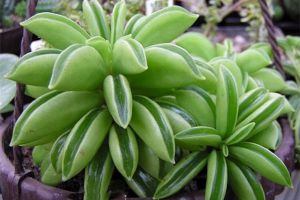
The axe-leaf peperomia is a succulent in the genus Peperomia, family Piperaceae, native to Peru. Its leaf shape is unusual and the plant is compact, with each leaf shaped just like an axe, and the leaf color is a powdery gray-green. The axe-leaf peperomia does not have high light requirements and is suitable for home cultivation!
Habits of the Axe-Leaf Peperomia
The axe-leaf peperomia is a succulent plant in the genus Peperomia, family Piperaceae, and its growing season is spring and autumn.
The axe-leaf peperomia is native to Peru and needs a sunny, cool and dry environment; it tolerates partial shade, fears waterlogging, and dislikes muggy, humid conditions. It has the habit of growing in cool seasons and going dormant during high summer temperatures and low winter temperatures.
During the growing season, keep the soil slightly moist and avoid standing water. Keep the temperature at 15~25°C and try to grow it in a sunroom with full sun.
Common propagation methods for the axe-leaf peperomia: cuttings and sowing.
Care Tips for the Axe-Leaf Peperomia
Repotting: For a newly purchased potted plant, place it on a windowsill with a screen window, away from direct sunlight. Repot every spring, and when repotting, cut off leaves that are overcrowded or overlapping. The potting soil is usually a mix of leaf mold, potting soil and river sand.
Watering: Water thoroughly during the growing season, and keep the potting soil dry in winter.
Fertilizing: Fertilize once every 3~4 weeks, choose a low-nitrogen fertilizer, and do not let the fertilizer solution touch the leaf surface.
Pests and diseases: The axe-leaf peperomia is prone to leaf spot disease, which can be prevented by spraying Bordeaux mixture. When indoor ventilation is poor, it is easily harmed by scale insects; spray with omethoate at a 1000-fold dilution to kill them.
Propagation Methods for the Axe-Leaf Peperomia
Sowing: Select mature seeds and sow them at a spacing of 3~5 cm, keep the room temperature at 19~24°C, and they will germinate after 10 days.
Cuttings: In early summer, select plump stems and insert them into a sand bed; they will root after 2~3 weeks, and once they grow into seedlings they can be potted up.
Suggested planting combinations: Kalanchoe thyrsiflora and Sedum 'Hanatsukabotan'.
For more professional agricultural science and technology information, please scan the QR code to follow WeChat: NongXunNET

Please indicate the source when reposting.