What are the growth advantages of the inch plant? Read this article to find out
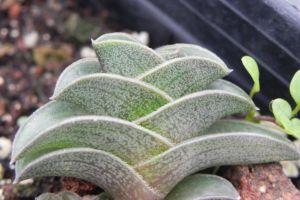
Common names of the inch plant
The inch plant is also commonly called "stacked-leaf grass"
Habits of the inch plant
The inch plant belongs to the genus Tradescantia in the Commelinaceae family, and summer is its most suitable growing season.
It is native to northeastern Mexico. It likes a warm, humid environment with plenty of sunlight, but avoids harsh sun exposure; it grows better in an environment of 18~23°C.
It is not cold-tolerant, and tolerates partial shade and drought.
Home care usually uses division and cuttings for propagation. Common pests and diseases include: leaf blight and scale insects
Care tips for the inch plant
Repotting: Repot in spring from March to April, and when repotting, cut off dead leaves and long stems. A pot with a diameter of 12~15 cm can be used. Use a mixed soil of leaf mold, potting soil and coarse sand for the potting soil, and add a small amount of bone meal.
Watering: Keep the potting soil moist during the growing season, and slightly dry in winter. Follow the principle of "water thoroughly when the soil is dry."
Fertilizing: Fertilize once every half month during the growing season, but the amount should not be too much.
Light and temperature: The suitable growth temperature is 18~25°C, and in winter it should not be lower than 10 degrees.
Propagation methods of the inch plant
Division: Carry out division propagation in spring together with repotting, pulling out the dense and crowded stems and leaves from the inside. Plant 3~4 plants per pot.
Cuttings: From May to September, cut folded short stems, 7~8 cm long, and insert them into a sand bed. After insertion, they root in 10~15 days, and 1 week later they can be potted.
Suggested planting combinations: Kalanchoe tomentosa, Sedum rubrotinctum
Supplement: The inch plant is suitable for placement in a spot with bright light.
For more professional agricultural science and technology information, please scan the QR code to follow WeChat: NongXunNET

Please indicate the source when reprinting.