What other names does Lithops have? Let us walk you through its common names
Lithops is native to southern and southwestern Africa, and is commonly found in cracks in rock beds and among gravel. It is described as a "living stone." It grows and blooms outside the rainy season. At peak bloom, Lithops is like spreading a huge flower blanket over the desert. But when the dry summer comes, the desert returns to a world of "stones."
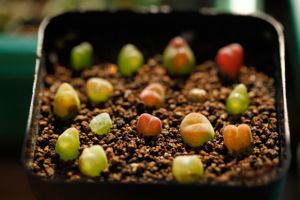
Other names for Lithops
Stone flower, stone grass, elephant hoof, ingot, female immortal, butt flower.
Growth habits of Lithops
Lithops likes a climate with warm winters and cool summers, and is suited to growing in warm, dry, and sunny environments. It fears low temperatures and avoids strong light. The optimum growth temperature is 10~30°C, and it is best grown in loose, breathable, neutral sandy loam.
The growth form of Lithops is rather special. During the dormant period it sheds its skin, and appropriately reducing water in winter and summer helps with this skin shedding.
3-4-year-old Lithops bloom in autumn from the gap between the opposite leaves, producing flowers in colors such as yellow, white, and pink. They mostly open in the afternoon, close in the evening, and open again the next afternoon. A single flower can stay open for 3-7 days. When blooming, the flower covers almost the entire plant, and is very delicate and beautiful. Also, after some varieties reach a certain age, they will split heads and grow in clusters. After the flowers fade, they bear fruit, from which very tiny seeds can be harvested.
The symbolism of Lithops
The symbolism of Lithops - tenacity, the jewel of life, a sheep in wolf's clothing.
For more professional agricultural science and technology news, please scan the QR code to follow WeChat: NongXunNET

Please indicate the source when reprinting.