What are the other names for pokeweed? Common aliases at a glance
Phytolaccaceae genus
Phytolaccaceae, genus Phytolacca, Latin scientific name Phytolacca acinosa Roxb
Other names of pokeweed
Zhangliu, large amaranth, mountain radish, jianzhongxiao, daoshuilian, jinqiniang, zhumaer, baimuji
Distribution of pokeweed
Pokeweed is widely distributed in the red soil hilly areas south of the Yangtze River, and is mainly produced in North China and Central China. Among the varieties currently distributed in our country, there are mainly Phytolacca acinosa and Phytolacca americana (drooping pokeweed).
Morphological characteristics of pokeweed
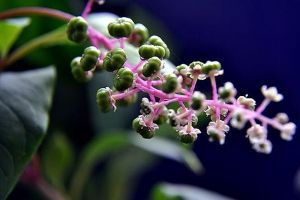
Pokeweed is a perennial herbaceous plant, and the whole plant surface is hairless. It has a conical fleshy root, rather thick, with the outer skin of the root appearing pale yellow or grayish brown and the inner part yellow-white; the stem of pokeweed is upright and cylindrical, with longitudinal grooves on the surface. The stem is green in the young parts and purplish-red in the old parts, and is much branched; the leaves are ovate, with a thin papery feel, the leaf tip is acuminate, the base is wedge-shaped and gradually narrowed, and the upper and lower surfaces of the leaves are scattered with tiny white spots, while the midvein on the lower surface of the leaf is raised. Pokeweed has a spike inflorescence, blooms in summer and autumn, and the flowers are white. It has eight separate carpels. The berry is purplish-black, oblate, and borne in clusters.
Growing environment of pokeweed
Pokeweed has very strong vitality and is distributed in plains, hills and mountains, and is commonly seen by roadsides and around the front and back of houses. Pokeweed likes warm and humid climatic conditions, and the suitable growing temperature is between 14~30°C; after autumn, the aboveground part of pokeweed withers after the leaves fall, while the underground fleshy root can withstand a low temperature of -15°C, and when it is warm the next year the fleshy root sprouts and drives the growth of the aboveground part; pokeweed is very adaptable to soil and has no special requirements for soil, and basically can grow in any soil.
For more professional agricultural science and technology information, please scan the QR code to follow WeChat: NongXunNET

Please indicate the source when reprinting.