What are the characteristics of Echeveria purpusorum? Let us introduce you to this succulent plant
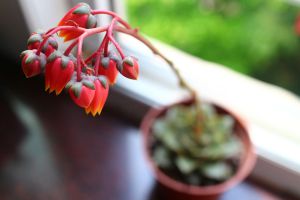
Common names of Echeveria purpusorum
Echeveria purpusorum is commonly known as "triangle rosette grass"
Habits of Echeveria purpusorum
Echeveria purpusorum is a plant in the Crassulaceae family, genus Echeveria, native to Mexico. The suitable growth temperature is 18~25℃
It likes a warm, dry environment with plenty of sunlight, is not cold-tolerant, and tolerates partial shade and drought.
For home care, sowing, cuttings and division are commonly used for propagation. Common pests and diseases include: leaf spot disease and black weevil
Care tips for Echeveria purpusorum
Repotting: repot every spring. When repotting, cut off the shriveled dead leaves at the base of the plant and any overly long fibrous roots. Use a mix of peat soil and coarse sand for the potting soil, with a small amount of bone meal added.
Watering: during the growing season, water once a week 1time; never let the potting soil get too wet. In winter, water only1~2times, and keep the potting soil dry. When the air is dry, do not spray water on the leaves; only mist around the pot, so as to avoid water accumulating in the leaf rosette and causing rot.
Fertilizing: fertilize once a month 1time during the growing season; never let the fertilizer solution soil the leaf surface.
Light and temperature: a full-sun plant, but avoid direct sun exposure.
Propagation methods for Echeveria purpusorum
Sowing: sow immediately after the seeds mature; the suitable germination temperature is 16~19℃.
Cuttings: high survival rate. In late spring, the entire rosette can be used for leaf cuttings, or fleshy leaves can be used for cuttings.
Division: propagate by division in spring
Suggested planting combinations: Sedum rubrotinctum, Sedum japonicum
Note: when watering, use a squeeze-type curved-spout pot and water along the edge of the flower pot; never pour water directly onto the leaves.
For more professional agricultural science and technology information, please scan the QR code to follow WeChat: NongXunNET

Please indicate the source when reprinting.