What are the common names of the peony? An introduction to the common aliases of the peony
The peony flower is brilliant in color and elegant in bearing. According to different colors, there are hundreds of varieties. The flowers are large and fragrant, and it is known as the "national beauty and heavenly fragrance." Since ancient times, the peony flower has been acclaimed as the king of flowers, with rich cultural and painting works.
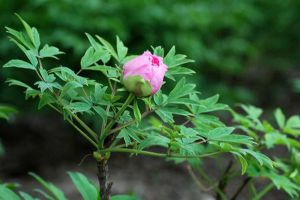
Aliases of the peony flower
Shugu (rat aunt), Lujiu (deer leek), Bairong (white down), Mu Shaoyao (tree peony), Baiyujin (hundred rain gold), Luoyang flower, Fugui flower (wealth and honor flower).
Growing habits of the peony flower
It likes a warm, cool, dry, and sunny environment. It likes sunlight, can also tolerate partial shade, tolerates mild alkalinity, fears waterlogging, and fears direct scorching sun. It is suitable for growing in loose, fertile, neutral soil. If the soil is too sticky, it is prone to poor growth.
The suitable temperature for growth is 15~25℃, and above 25℃ it enters a dormant state. Between 17~20℃, it blooms most brilliantly. The peony flower is tolerant of low temperatures and can overwinter safely even at -30℃. However, in cold northern regions, attention should be paid to keeping warm in winter to avoid frost damage.
The high-temperature and high-humidity environment of the south is unfavorable to the growth of peonies, so in the south, specific conditions are needed for care in order to see the wondrously beautiful peony flowers.
Morphological characteristics of the peony flower
The peony flower is a perennial deciduous small shrub with slow growth and a small plant type, with a plant height mostly between 0.5 and 2 m; the roots are fleshy, thick and long, with a lignified center, generally 0.5 to 0.8 m in length, and in very few cases the root length can reach 2 m; the color of the root bark and root flesh varies by variety; the peony flower's branches are upright and brittle, round, and form a shrub shape from several branches clustered at the rhizome. Current-year branches are smooth, herbaceous, yellow-brown, and often split and peel off; the leaves are alternate, and the leaf blades are usually bipinnately trifoliolate compound leaves. The upper part of the peony flower's branches often has simple leaves. The leaflets have shapes such as lanceolate, ovate, and elliptical. The terminal leaflet is often 2 to 3 lobed. The upper side of the leaf is dark green or yellow-green, and the underside is gray-green, smooth or hairy; the peony flower's total petiole is 8 to 20 cm long, with grooves on the surface; the flowers are solitary at the top of the current-year branches, bisexual, large and brightly colored, beautiful and varied in form, with a flower diameter of 10 to 30 cm; the flower colors include ten major colors: white, yellow, pink, red, purple-red, purple, ink purple (black), snow blue (pink-blue), green, and compound color.
Types of peony flowers
There are many classification methods for peony flowers. By plant type, they can be divided into upright type, spreading type, and semi-spreading type; by bud type, they can be divided into round bud type, narrow bud type, hawk-beak type, and exposed-mouth type; by branching habit, they can be divided into single-branch type and clustered-branch type; by flower color, they can be divided into white, yellow, pink, red, purple, ink purple (black), snow blue (pink-blue), green, and compound color; by flowering period, they can be divided into early-flowering type, mid-flowering type, late-flowering type, and autumn-winter type (some varieties have the habit of blooming twice, and after blooming in spring, they can naturally bloom again in autumn and winter, which is called the autumn-winter type); by flower type, they can be divided into four levels: series, class, group, and type. The four series are the peony series, the rockii peony series, the yellow peony series, and the purple peony series; the two classes are the single-flower class and the terrace-flower class; the two groups are the thousand-layer group and the tower group; below the group, they are divided into several types according to flower shape, such as single-petal type, lotus type, guifei type, crown type, and so on.
After the peony flower changed from wild to cultivated, due to changes in environmental conditions and continuous artificial selection and cultivation, in addition to variations in flower color, flower type, and early or late flowering period, variations also occurred in plant morphology, root length and thickness, and leaf color and shape.
The flower language of the peony flower
The peony flower is the king of a hundred flowers, with meanings of completeness, wealth and honor, and graceful elegance. The peony flower also symbolizes expectation, faint love, wholehearted devotion, and noble and trustworthy people.
For more professional agricultural science and technology information, please scan the QR code to follow WeChat: NongXunNET

Please indicate the source when reprinting.