How to grow Million Bells (Calibrachoa) and key points to note
Botanical characteristics of Million Bells
The plants of Million Bells are covered with dense fine downy hairs, and the leaves are obovate-lanceolate or narrowly elliptic.
They have semi-lignified flower stems, and compared with ordinary plants of the Solanaceae family, Million Bells are more resistant to rain.
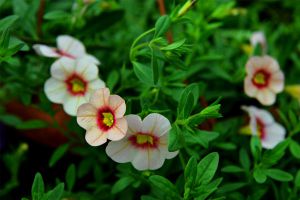
The corolla of the flower is funnel-shaped, and the petals are very small, but the number of flowers is astonishing; when in full bloom they look like a cascading waterfall. The name "Million Bells" also comes from the fact that each small flower closely resembles a beautiful little bell. Compared with ordinary petunias, both the flowers and leaves are smaller, but the flowering period of a single flower is longer; each flower stays open for about a week, and the flowers cover the branches like a waterfall. The small flowers are very lovely. Because the flowers resemble bells and are numerous, people affectionately call them "Million Bells". Similar to petunias, the flowers are slightly smaller, but more numerous, denser and longer-lasting, and therefore more popular. Those who own "Million Bells" call themselves "millionaires"; if you own 10 pots of "Million Bells", then you are a "ten-millionaire", someone whom everyone envies, is jealous of, or even wants to "rob".
Growth habits of Million Bells
Although Million Bells have a relatively long flowering period, their ability to adapt to the environment is only average, and careful care is needed for them to possibly bloom in all four seasons.
The flower language of Million Bells
The flower language of Million Bells is similar to that of petunias, carrying the beautiful meaning of "being with you".
For more professional agricultural science and technology information, please scan the QR code to follow WeChat: NongXunNET

Please indicate the source when reposting.