What are the characteristics of Dianthus? Introducing the morphology and habits of Dianthus
It is a perennial herbaceous plant of the genus Dianthus in the family Caryophyllaceae. Because its stems have nodes that swell like bamboo, it is named Dianthus. Dianthus is a very good ornamental flower. Placed at home as a potted plant, it is both attractive and can purify the air.
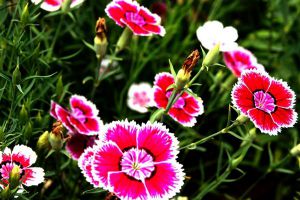
Alternative names of Dianthus
Luoyang flower, stone chrysanthemum, embroidered bamboo, evergreen summer, dusk grass, Quamai grass, Chinese Dianthus, Luoyang Dianthus, and carnation.
Growth habits of Dianthus
Dianthus likes a sunny environment, is cold-resistant, drought-resistant, afraid of waterlogging, and likes well-drained, loose and fertile sandy soil.
Dianthus originally grew in areas at an altitude of 10-2700 m and is widely distributed on grasslands.
The flower language of Dianthus
Dianthus represents pure love, talent, boldness, and feminine beauty.
In addition, the Dianthus flower is also a special flower for Mother's Day, representing a mother's love and pure love. In the hearts of people all over the world, it is truly a symbol of Mother's Day. We usually say, don't we need to give carnations on Mother's Day? That's right, carnations are also called fragrant Dianthus and are also a type of Dianthus, but when people give carnations, they forget its other name.
For more professional agricultural science and technology information, please scan the QR code to follow WeChat: NongXunNET

Please indicate the source when reprinting.