What are the other names for the Dancing Bones cactus? It turns out it can also be called this
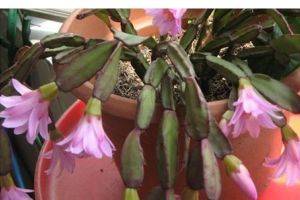
Common names of the Dancing Bones cactus
The Dancing Bones cactus is commonly known as Luohuawu and Xianrenbian.
Habits of the Dancing Bones cactus
The Dancing Bones cactus is a succulent plant in the cactus family, genus Rhipsalidopsis. Spring and autumn are its growing seasons.
The Dancing Bones cactus is native to southeastern Brazil, growing in warm, humid, semi-shaded environments. It requires a certain level of air humidity, with an ideal temperature of 18~23°C.
It is not cold-tolerant, tolerates semi-shade, and fears waterlogging. It does not need much water; water once a week, and in summer ensure timely ventilation and shade to avoid direct strong sunlight.
Common propagation methods for the Dancing Bones cactus: cuttings and grafting.
Care tips for the Dancing Bones cactus
Repotting: Repot once every two years. When repotting, shorten overly long or dense branches. Pots are usually 12~15 cm, hanging baskets use 15~20 cm pots, with 3~5 plants per pot.
Watering: Water once a week in spring and autumn to keep the soil moist. Provide appropriate shade in summer, and keep the soil moderately moist in winter. The specific watering frequency depends on the room temperature.
Fertilizing: Fertilize once a month, using low-nitrogen fertilizer or succulent-specific fertilizer.
Light: Ensure sufficient light during the flowering period, and move the plant as little as possible to avoid broken stems and fallen flowers.
Pests and diseases: Common pests and diseases include anthracnose and red spider mites. Once diseased plants are found, promptly remove diseased leaves and spray fungicide.
Propagation methods of the Dancing Bones cactus
Cuttings: In early summer, select healthy, plump stem segments, cut 1~2 segments and let them dry in a cool place, then insert into a sand bed; roots will form after 2 weeks.
Grafting: In late spring or autumn, graft using the splice method; healing and survival take 15 days.
Suggested planting combinations: Portulacaria afra 'Medio-picta' (rainbow bush), Sedum lineare 'Variegatum'.
For more professional agricultural science and technology information, please scan the QR code to follow WeChat: NongXunNET

Please indicate the source when reposting.