What Is Passionflower? A Look at Its Basic Facts
Passionflower is a fragrant and delicious fruit, known as the "king of juices," and is loved by many people. Today we are going to get to know this amazing plant, so let's all learn something new together.
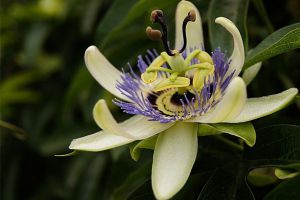
The genus and family of passionflower
Passionflower is a perennial evergreen climbing woody vine belonging to the genus Passiflora in the family Passifloraceae.
Other names for passionflower
Passionflower is also called maypop, Brazilian fruit, vine peach, passion fruit, zhuanxinlian, xiyangju, zhuanzhilian, yangsuanqiehua, and clock grass.
The origin of passionflower
Cultivated in Guangxi, Jiangxi, Sichuan, Yunnan and other places in China, sometimes escaping into the wild. Native to South America. Commonly cultivated in tropical and subtropical regions.
Morphological characteristics of passionflower
The stem of passionflower is cylindrical and slightly angular, hairless; the leaves are papery, heart-shaped at the base, palmately 5-parted, with the middle lobe ovate-oblong and the lateral lobes slightly smaller, hairless and with entire margins.
The cyme is reduced to only 1 flower, opposite the tendril; the flower is large, pale green, and the flowering period is May to July.
The berry is ovate-spherical to nearly spherical, orange-yellow or yellow when ripe; seeds are numerous, obcordate, about 5 mm long.
For more professional agricultural science and technology information, please scan the QR code to follow WeChat: NongXunNET

Please indicate the source when reposting.