What other names does Calendula have? You may not know these names
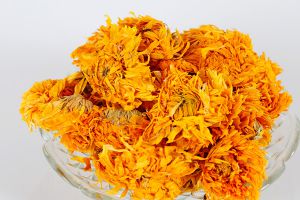
Other names for calendula
Calendula, also known as pot marigold, golden cup, long-life chrysanthemum, sober-up flower, evergreen flower, and golden cup flower, is a plant of the genus Calendula in the Asteraceae family. It is native to southern Europe and is an improved variety of the small wild calendula.
Morphological characteristics of calendula
Calendula is a biennial herb in the Asteraceae family. The whole plant is covered with hairs. Leaves are alternate and oblong. The flower head is solitary, with a flower diameter of about 5 cm, and colors include yellow, orange, orange-red, white, etc. There are also cultivated varieties with double petals, curled petals, green centers, and dark purple flower centers. Different varieties of calendula also have different morphological characteristics.
The flower language of calendula
Calendula has another alias, called "the housewife's clock." Because this plant opens its flowers at a certain time in the morning and then closes them at a certain time in the evening, it is a rather punctual flower. Therefore, its flower language is "meticulous."
People born under the blessing of this flower have a strict and meticulous personality. However, being too rigid can make it impossible to tolerate a friend of the opposite sex being late for a date, so romances mostly do not last long.
Complete list of calendula varieties
Common calendula varieties include BonBon, with a plant height of 30 cm, compact flowers, flower diameter of 5 to 7 cm, and colors including yellow, apricot yellow, orange, etc.
FiestaGitana, with a plant height of 25 to 30 cm, an early-flowering variety, double flowers, flower diameter of 5 cm, and colors including yellow, orange, and bicolor, etc.
The Kablouna series, with a plant height of 50 cm, a large-flowered variety, with colors including golden yellow, orange, lemon yellow, apricot yellow, etc., and dark flower centers. Among them, the 1998 new variety KablounaLemonCream has beige ligulate flowers and a lemon-yellow flower center.
TouchofRed, with a plant height of 40 to 45 cm, double flowers, flower diameter of 6 cm, and colors including red, yellow, and red/yellow bicolor, with the tip of each ligulate flower being red. The Gem series, with a plant height of 30 cm, double flowers, flower diameter of 6 to 7 cm, and colors including lemon yellow and golden yellow. Among them, DwarfGem is even more famous.
In addition, Saint Guitar is an extremely dwarf variety with large double flowers and a flower diameter of 8 to 10 cm. Xiangrui is an extremely dwarf variety with strong branching, large double flowers, and a flower diameter of 7 to 8 cm.
There are also LemonQueen and OrangeKing, etc.
Functions and effects of calendula
Ornamental use: The calendula plant is low-growing, with dense flowers and bright, eye-catching colors, and a long blooming period, making it one of the most common herbaceous flowers in early spring gardens and cities. Calendula has a very strong resistance to sulfur dioxide and also has a certain resistance to cyanide and hydrogen sulfide. It is an excellent pollution-resistant flower and also the main calendula material for spring flower beds, and can be used as cut flowers and potted plants.
Skincare effect: Calendula has an extremely strong healing ability, sterilizes and astringes wounds, treats inflammation, acne, and enlarged pores, and prevents the formation of scars; it soothes the skin and improves sensitive skin. It has the effect of repairing scars; it moisturizes dry lips and promotes skin metabolism. Especially for dry skin, it has a high moisturizing effect.
Medicinal and edible value: Calendula is rich in a variety of vitamins, especially vitamin A and vitamin C; almost all parts can be eaten; its petals have a beauty function. The flowers contain carotenoids, lycopene, violaxanthin, rubixanthin, volatile oil, resin, mucilage, malic acid, etc. The roots contain bitter substances and arnidiol; the seeds contain glycerides, wax alcohols, and alkaloids. Adding it to shampoo can make hair color lighter.
Calendula is mild and neutral in nature and flavor, and its flowers and leaves have anti-inflammatory and antibacterial effects. The root can promote qi and invigorate blood, and the flowers can cool the blood and stop bleeding. In European folk medicine, it is used externally for various inflammations of the skin and mucous membranes, and can also be taken internally to treat various inflammations and ulcers.
For more professional agricultural science and technology information, please scan the QR code to follow WeChat: NongXunNET

Please indicate the source when reprinting.