How to Grow and Care for the Ruschia pulchella Succulent: Methods and Precautions
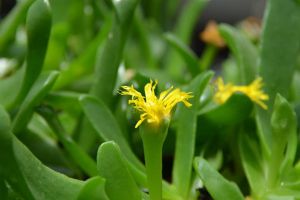
Habits of Ruschia pulchella
Ruschia pulchella is a succulent in the genus Ruschia, family Aizoaceae, and winter is its peak growing season.
Ruschia pulchella is native to South Africa and prefers a warm, dry environment with plenty of sunlight. Its optimum growing temperature is 18~24°C; if the temperature is too high, the plant will wilt.
Ruschia pulchella is not cold-tolerant, but it is tolerant of drought and partial shade. It can take all-day sun, and should be given appropriate shade during high summer temperatures. During the growing season, keep the potting soil slightly moist and water once a week.
Common propagation methods include sowing and cuttings.
Planting and Care Tips for Ruschia pulchella
Care Tips for Ruschia pulchella
Repotting: Repot once every 1~2 years, in spring. When repotting, also replace the soil; choose a mix of peat soil and coarse sand, with a small amount of bone meal added to the soil.
Watering: Water the succulent moderately during the growing season, once a week. In summer, when temperatures are high and air humidity is low, replenish water promptly, or mist to increase air humidity. In winter, keep the potting soil dry. In addition, water appropriately during the flowering period, otherwise the flowers will easily wither.
Fertilizing: Fertilize once a month during the growing season.
Pests and diseases: During the flowering period, the plant is weak and susceptible to aphid damage; spray with a 50% pirimicarb 2000-times solution. Ruschia pulchella can also be attacked by leaf spot disease, with brown spots appearing on the leaves; spray with a 65% mancozeb wettable powder 600 solution for control.
Propagation Methods for Ruschia pulchella
Sowing: Sow in spring, keeping the temperature at 19~24°C.
Cuttings: When the plant is growing well (during the growing season), cut off a leafy branch for cuttings. Let the branch dry naturally in a cool, shaded place for 1~2 days, then insert it into a sand bed, otherwise the branch will easily rot. After cutting, just keep the potting soil slightly moist.
Suggested planting combinations: Oscularia deltoides, Sedum lineare.
For more professional agricultural science and technology information, please scan the QR code to follow WeChat: NongXunNET

Please indicate the source when reprinting.