How adaptable is Graptopetalum paraguayense 'Silver Star' exactly? Let us take a detailed look.
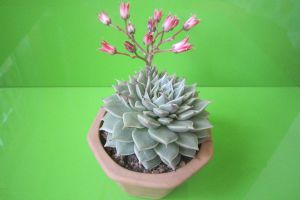
Growing Habits
An intergeneric hybrid of Graptopetalum and Echeveria. Its growing season is in summer, and it likes a warm, dry environment with plenty of sunlight. It is not cold-tolerant, and tolerates drought and partial shade.
Favorite temperature: 18-24℃
Watering: once a week during the growing season
Light: full sun
Propagation: cuttings
Pests and diseases: rust, black vine weevil
Combination suggestions: Sempervivum arachnoideum 'Red', Echeveria 'Perle von Nurnberg'
Planting and Care Tips for Graptopetalum paraguayense 'Silver Star'
Care Tips for Graptopetalum paraguayense 'Silver Star'
Potting soil: Repot every spring, using a mix of peat soil, potting soil and coarse sand, plus a small amount of bone meal. During the spring and summer growing season, keep the potting soil moist.
Fertilizing: Fertilize once a month, or use a special succulent fertilizer. During summer dormancy, stop fertilizing and keep the potting soil slightly dry.
Leaf rosette: It blooms in spring and summer, sending up a flower scape from the center of the rosette. After flowering, the rosette gradually withers and dies. To protect the rosette, remove the flower stalk promptly.
Propagation Methods for Graptopetalum paraguayense 'Silver Star'
Cuttings: Can be done year-round, but spring and autumn are best. For cuttings, use rosette-shaped top shoots, insert them into a sand bed, and keep the room temperature at 20-24℃; they root 15-20 days after insertion. You can also use mature leaves, laid flat or inserted at an angle in the sand bed; they root about 10 days after insertion.
For more professional agricultural science and technology information, please scan the QR code to follow WeChat: NongXunNET

Please indicate the source when reprinting.