What is the common name of the French marigold? This article tells you the answer
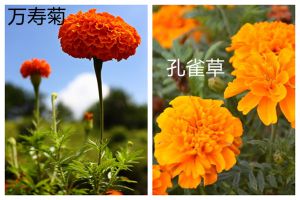
French marigold
The French marigold is a very good Chinese medicinal herb, with the effect of clearing heat and detoxifying. Besides its medicinal use, the French marigold is also widely used in garden ornamentation. The French marigold has rich flower colors and a long flowering period, blooming from May 1 to October 1. The French marigold has gradually become a main flower of flower beds and courtyards. Its orange, yellow and red flowers are extremely eye-catching, adding much vitality to wherever it is planted. Its role and value have attracted the attention of many garden workers, and it has also been developed for potted plants and cut flowers.
French marigold flower language:
The French marigold is the birthday flower of August 21, and its flower language is cheerful sunshine.
Common names of the French marigold
The French marigold originally had a common name called "sunflower". Only later was it "stolen" by the sunflower. Its flowers have the habit of opening at sunrise and closing tightly at sunset, and it grows in a heliotropic manner. Therefore its flower language is "clear weather", extended to "cheerful, lively". Anyone born under the blessing of this flower has a personality that never drags things out, which is a rare virtue!
Morphological characteristics:
The French marigold plant height is 30 to 40 cm. Pinnately compound leaves, leaflets lanceolate. Flower stalks emerge from the leaf axils, capitulum terminal, single or double. Flower colors include red-brown, yellow-brown, pale yellow, purple-red spots, etc. The flower shape is similar to the marigold, but smaller and more numerous. When blooming, on the short, many-branched plant, golden-orange flowers cover the tips of the branches, appearing gorgeous and lovely. The French marigold has very good ornamental value, suitable for potted planting, ground planting and cut flowers. Leaves opposite, pinnately parted, lobes lanceolate, leaf margins with obvious oil gland dots. Capitulum terminal, the outer ring of the flower is dark red, the inner part is yellow, hence it is also called red-yellow herb.
Varieties:
There are many varieties of French marigold. Because of repeated interspecific hybridization, besides red-yellow, pure yellow, orange and other varieties have also been cultivated, and there are also single-petal, double-petal and other varieties. The flowering period runs from "May 1" all the way to "October 1".
Application value:
1. Medicinal value. The flowers and leaves of the French marigold can be used as medicine, with very good medicinal and health-care effects. The French marigold has the effects of clearing heat and resolving phlegm, and enriching blood and promoting menstruation. It can treat whooping cough, bronchitis and colds.
2. Ornamental value. The French marigold has strong adaptability, is cold-resistant and drought-resistant, can grow on its own, and is easy to manage. It is often used to decorate flower beds. Because salvia cannot withstand the low temperature of "May 1", nor the early frost of "October 1", and the severe heat of midsummer can make most plants appear half-dead. Therefore, the French marigold has gradually become a main flower of flower beds and courtyards. Its orange, yellow and red flowers are extremely eye-catching, adding much vitality to wherever it is planted. Its role and value have attracted the attention of many garden workers, and it has also been developed for potted plants and cut flowers.
Origin and distribution:
The French marigold is native to Mexico. It is a flower with very strong adaptability. It can also be seen in many places in China, especially more commonly in the south. Its flowering period is from March to May and from August to December.
Growth habits:
The French marigold likes sunlight, but it can also bloom when planted in semi-shade. It is not strict about soil requirements. It tolerates transplanting, grows rapidly, and is very easy to cultivate and manage. Seeds that fall on the ground can grow on their own under suitable temperature and humidity conditions, making it a flower with very strong adaptability. In southern China, its flowering period is from March to May and from August to December. From sowing to flowering takes only 70 days. For early spring seedling raising, no heating is needed in the greenhouse, and after the late frost it can be planted in courtyards, flower beds or pots.
For more professional agricultural science and technology information, please scan the QR code to follow WeChat: NongXunNET

Please indicate the source when reprinting.