Is the red spider lily easy to grow? A full analysis of its growing difficulty
The red spider lily is a flower full of magical color, and folk legends about the "Higan flower" all carry a sense of mystery. It is a flower that blooms in the heavenly realm, blooming in the seventh lunar month, growing in summer and setting flowers in autumn. It is the receiving flower that grows on the banks of the Sanzu River. Its fragrance is said to have magic power, able to awaken the memories of the dead from before their death.
Alternative names of the red spider lily
Wuyi grass, dragon claw flower, ghost fire, phantom flower, hell flower, shezi flower, shanwudu, flower of life and death, flower that never sees its leaves, ghost umbrella, soul-guiding flower, receiving flower, Wangchuan flower, shisuan, red-flowered shisuan, and more.
Morphological characteristics
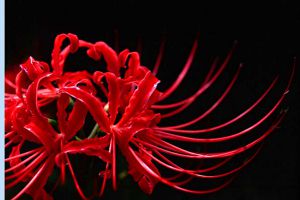
The red spider lily is a perennial herbaceous flowering plant in the Amaryllidaceae family. Its flowers resemble dragon claws. It has bulbs shaped like onion heads; the leaves grow in clusters, are slender with pointed tips, resemble garlic leaves, are fleshy, strap-shaped, blue-green with a white powdery coating; the flower scape is solitary, with a terminal umbel. At the turn of summer and autumn, the flower scape breaks through the soil, and the terminal umbel bears 5 to 7 flowers, strikingly red (besides red there is also a white variety), with petals rolled back like dragon claws. It blooms first and grows leaves later; the leaves do not fall in winter, and in summer the leaves fall and the plant goes dormant. Because the flowers and leaves cannot meet, shisuan is also called the "heartless and faithless" flower. The three days around the spring equinox are called the spring Higan, and the three days around the autumn equinox are called the autumn Higan. The red spider lily blooms during the autumn Higan period, very punctually, which is why it is called the Higan flower.
Growth habits of the red spider lily
Wild varieties of the red spider lily grow in gloomy, damp places (graves or rural roadside edges), and their growing sites are red soil, so they are highly cold-resistant, prefer shade, and can endure a high-temperature limit of an average daily temperature of 24°C; they like moisture and also tolerate drought, are accustomed to slightly acidic soil, and do best in loose, fertile humus soil. They have a habit of summer dormancy and are extremely easy to propagate; usually a single shisuan easily develops into a whole patch of shisuan.
The flower language and legends of the red spider lily
In Japan, the three days around the autumn equinox are called the autumn Higan, a time when Japanese people visit graves. The red spider lily blooms during the autumn Higan period, very punctually, which is why it is called the Higan flower, and its flower language is sad memories.
The red spider lily is a flower that voluntarily entered hell, was sent back by all the demons, but still lingered on the road to the underworld. The demons could not bear it and therefore agreed to let her bloom on this road, giving guidance and comfort to the souls leaving the human world. Its colors are divided into blood red and white; yellow and peach-pink are shisuan, and there is no purple, blue, or black. Enma Ai from Hell Girl likes this kind of flower, and its flower language is the tenderness of a demon.
Snow-white and blood-red red spider lilies together represent death. It is said that the white mandala flower blooms on the road to heaven, while the red mandala flower covers the road to hell. One flower language of the white mandala flower is: "a letter from heaven," and one flower language of the red mandala flower is "the call of hell." Both represent death, yet one leans toward another interpretation of death: rebirth, while the other leans toward wandering and hesitation over pain and regret: fall. So hell and heaven are separated by only a thin line. The so-called difference between angels and demons is merely color and the meaning carried.
Uses of the red spider lily
Red-flowered shisuan is a common ornamental garden plant in East Asia; its leaves are enjoyed in winter and its flowers in autumn. This flower is mostly used for planting in villa gardens, generally planted by the hundreds or thousands together, and it blooms in large numbers in autumn, with an excellent landscape effect.
Although shisuan is highly ornamental, its rhizome is toxic. The bulb contains the alkaloid lycorine poison, which can cause symptoms such as vomiting and convulsions and has a clear effect on the central nervous system. It must not be eaten casually, but it can be used for sedation, inhibition of drug metabolism, and anticancer effects. Although toxic, the bulb can be eaten after processing and is also used as a medicinal material. "Galanthamine" extracted from the rhizome of shisuan can be used to treat polio; it has begun to be used abroad, and experts in our country are also carrying out in-depth research.
The medicinal bulb contains a variety of alkaloids, such as lycorine, lycoramine, galanthamine, and others. It has the effects of dispelling wind and reducing swelling, detoxifying, and fighting cancer. It is used to treat gastric cancer, esophageal cancer, and liver cancer, and has been tried in the treatment of lung cancer, ovarian cancer, cervical cancer, and lymphoma.
For more professional agricultural science and technology information, please scan the QR code to follow WeChat: NongXunNET

Please indicate the source when reprinting.