What growth advantages does sea lavender have? Learn before planting
Growth advantages of sea lavender. Sea lavender belongs to the family Plumbaginaceae, genus Limonium; sea lavender is also known as salt cloud grass, salt cloud ginseng, spoon-leaf grass, and jisong. Sea lavender origin: sea lavender is native to Russia, Bulgaria, the Caucasus and other places, and in China it is mainly distributed on hillsides and meadow saline soils in Northeast China, Inner Mongolia, Xinjiang and other places. Sea lavender morphological characteristics: the whole sea lavender plant is hairless 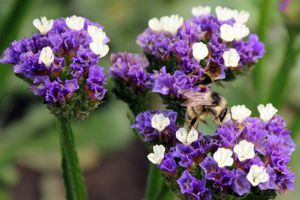
Sea lavender is a perennial herb with small, colorful and elegantly simple flowers and an extremely long ornamental period, making it a very common fresh-cut flower material. Dried sea lavender flowers are also very widely used, and the indoor decoration effect can last for more than a year!
Sea lavender family and genus
Plumbaginaceae, genus Limonium
Sea lavender alternative names
Salt cloud grass, salt cloud ginseng, spoon-leaf grass, jisong
Sea lavender origin
Sea lavender is native to Russia, Bulgaria, the Caucasus and other places, and in China it is mainly distributed on hillsides and meadow saline soils in Northeast China, Inner Mongolia, Xinjiang and other places.
Sea lavender morphological characteristics
The whole sea lavender plant is hairless and about 15-60 cm tall. The leaves are basal, light green or grayish green, oblong, with slightly blunt or acute tips, and the lower part of the leaf gradually narrows to form a flat petiole, arranged in a rosette; sea lavender has umbel-like or paniculate inflorescences, the calyx is funnel-shaped, the calyx tube is about 1 mm in diameter, the corolla is yellow, the petals are blue-purple, and it has filiform stigmas. The fruit is yellowish brown and obovate; the flowering period is July-November in the north and April-December in the south.
Sea lavender growth habits
Sea lavender likes a cool climate environment and strong light. It blooms well after low-temperature treatment. The low temperature is between 10-16°C. If the plants are given low-temperature treatment during the seedling stage, later high temperatures will not affect flowering; if the seedlings are not given low-temperature treatment during the seedling stage and are directly grown under high temperatures, flowering will be noticeably inhibited or they will not bloom.
Sea lavender flower language and culture
The flower language of sea lavender is leaning close and following forever. It is usually given as a companion flower to well-known flowers, fully matching its flower language: not competing or quarreling, taking things calmly.
For more professional agricultural science and technology information, please scan the QR code to follow WeChat: NongXunNET

Please indicate the source when reprinting.