Is forget-me-not easy to grow? A detailed answer on its growing difficulty
Other names
Forget-me-not, also known as liu li cao, wu wang cao, winged sea lavender, xing chen hua, sea lavender, everlasting flower, spoon-leaf flower, Statice, and ji song, is a plant of the genus Myosotis in the family Boraginaceae.
Morphological characteristics
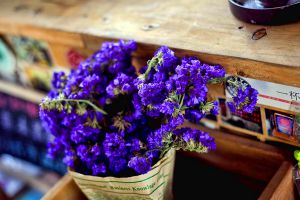
Forget-me-not is an annual or biennial herbaceous plant, 30-60cm tall. Leaves are simple and alternate, oblanceolate; the lower leaves are stalked and the upper leaves are stalkless. The raceme is terminal, 10-15cm long; the calyx is small with 5 lobes; the corolla is salverform with 5 lobes, blue, pink or white, with a yellow throat. The flowering period is April-May, and the small nutlets are brownish green, with the fruiting period in May-June.
Growth habits
Forget-me-not has strong adaptability. It prefers a dry, cool climate and dislikes damp heat. It likes light and tolerates drought. The optimum growing temperature is 20°C-25°C. It is suitable for growing in loose, fertile, well-drained slightly alkaline soil.
Flower language
The flower language of forget-me-not is eternal love, deep affection and friendship, and a heart that never changes. Forget-me-not is the sentimental one among flowers. Legend has it that in ancient Europe, a knight was touring the seaside with his beloved. His lover saw a bouquet of flowers standing in the water and wanted to pick them to wear. To please her, the knight waded into the water to pick them, but was unexpectedly swept away by the surging tide. Before being carried off, he did not forget to throw the flowers onto the shore and shout to his beloved, "Do not forget me!". Since then, this flower has been named forget-me-not and has become a token of mutual love, deeply cherished by couples.
Varieties and uses
Complete list of types
The Algerian type has orange-yellow flowers and plants over 1 m tall; the plant form is loose and slender, the flower color is brilliant, the flowering period is early, and the flower color lasts the longest.
The deep-wavy-leaf type has purple flowers and plants nearly 1 m tall; the plant form is compact and the stems are hard and sturdy. In addition, there are other color varieties, such as blue, white, orange-red, yellow, peach red, light red, purple-red, and blue-green.
Forget-me-not varieties can also be divided into early-maturing and late-maturing types. Early-maturing varieties include Early Blue, Gold Coast, Blue Pearl, and others. Mid-to-late-maturing varieties include Iceberg, Night Blue, Blue Velvet, and others. Growers should fully understand variety characteristics and market demand in order to choose suitable varieties.
Efficacy and value
Ornamental use: Forget-me-not flowers are small and delicate, with many flower colors. Although ordinary, couples like to tie them into a bouquet and give it to their loved one to express deep affection. Forget-me-not is often used as a cut flower. At present, what is sold in flower shops is not the real forget-me-not, but sea lavender; selling sea lavender as forget-me-not is only to take its beautiful meaning.
Forget-me-not flower tea: Forget-me-not can be made into flower tea for drinking. It has the effects of nourishing yin and tonifying the kidney, beautifying the face, tonifying blood and nourishing blood, and can promote the body's metabolism, delay cell aging, delay cell aging, improve immunity, resist viruses, and resist cancer and prevent cancer. It can be used to treat blood tonification and menstrual regulation, beauty and skin care, clearing fire and brightening the eyes, freckles and acne, low immunity, viral infections, insufficient blood supply to the heart and brain, and other conditions.
Photo appreciation
For more professional agricultural science and technology news, please scan the QR code to follow WeChat: NongXunNET

Please indicate the source when reprinting.