What are the other names for the "Little Rice Star"? Let's find out together.
The "Little Rice Star" is a succulent plant in the Crassulaceae family. Its leaves are pointed, grayish-green or light green, and when it blooms, the flowers hang all over the branches like grains of rice, quite gorgeous.
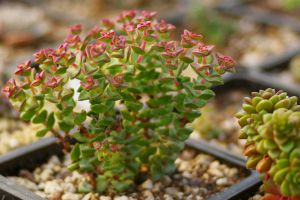
Morphological characteristics of the "Little Rice Star"
The "Little Rice Star" is a succulent plant in the Crassulaceae family, genus Crassula. The plant grows in clumps with small branches. After being grown for a long time, the stems gradually become semi-woody. The plant's fleshy leaves are grayish-green to light green, and the leaf margins are slightly red. In late autumn and early spring, when the temperature difference is large, the red color is especially noticeable.
Growth habits of the "Little Rice Star"
The "Little Rice Star" likes a sunny, dry, and cool environment. It grows in cool seasons and goes dormant in hot seasons, making it a typical winter-growing type.
The "Little Rice Star" can tolerate low temperatures of around -2°C, which refers to indoor temperatures, not outdoor conditions. If it gets any colder, the growing points at the tips of the leaves will suffer frost damage and dry up and die, but the following year new side branches will sprout again from the withered areas.
Propagation methods for the "Little Rice Star"
The "Little Rice Star" is generally propagated by beheading. Choose a healthy branch with a growing point, cut a 3~5 cm section, let the wound dry, and then insert it directly for cuttings.
For more professional agricultural science and technology information, please scan the QR code to follow WeChat: NongXunNET

Please indicate the source when reprinting.