What kind of growing environment does the Echeveria 'Yu Die' like? Explained clearly in one article
Yu Die originated in Hidalgo State, Mexico, and is now one of the more common ornamental succulents in Chinese households.
Other names for Yu Die
Yu Die is a perennial succulent herbaceous plant, also known by other names such as "stone lotus", "eight-treasure palm" and "gem flower".
Yu Die's morphological characteristics
The stem of Yu Dieis very short, generally growing from the base of the plant; the tip of the stolon bears a small rosette of leaves, and if it touches soil it can form a new plant, so Yu Die usually grows in patches.
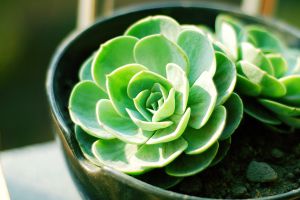
Yu Die has fleshy leaves arranged in a standard rosette shape, making the whole plant funnel-shaped; the leaves are usually blue-green or light green, with a waxy layer or white powder on the surface.
The inflorescence of Yu Die iscurved and scorpioid, with a yellow tip and an ochre-red front end.
Yu Die's growth habits
Yu Die's environmental adaptability is very strong, and it has relatively few requirements for growing conditions. Generally, a dry, warm place with sufficient light allows it to grow well; it has good drought resistance but slightly weak cold tolerance.
During Yu Die'sgrowing period from April to October, it can be placed outdoors in a sunny or semi-shaded spot for cultivation; in midsummer, shading is generally unnecessary, as long as good ventilation is ensured.
Yu Die's value and uses
Yu Die's value is mainly reflected in its ornamental aspect; its unique fleshy lotus-like shape is very beautiful, with strong home decorative appeal, and its care method is relatively easy, making it a good choice for making potted plants.In addition, Yu Die can also be placed in a greenhouse to arrange a small "desert plant landscape".
Yu Die's flower language
Yu Die symbolizes "love that never fades".
For more professional agricultural science and technology information, please scan the QR code to follow WeChat: NongXunNET

Please indicate the source when reprinting.