What are the characteristics of Alocasia macrorrhizos? A complete guide in one article
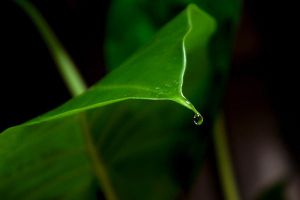
Alocasia macrorrhizos is a common ornamental plant in tropical and subtropical regions and has good medicinal value. Its flowers resemble Guanyin, and under good conditions it drips water downward from the leaf tips or leaf edges, so it is called dripping Guanyin.
Alternative names of Alocasia macrorrhizos
Dripping Guanyin, wolfsbane (underground stem), tianyu, Guanyin lotus, xiaotiancao, gutaiyu, and others.
Growth habits of Alocasia macrorrhizos
Alocasia macrorrhizos grows at a temperature of 20-30°C, and can tolerate a low temperature of 8°C at minimum. In summer high temperatures, as long as the soil is kept moist, water is sprayed frequently, and shade is provided, it can still grow normally. In winter, the room temperature must not be lower than 5°C. Alocasia macrorrhizos is an understory plant of tropical rainforests, so its growth requires high humidity and scattered light is best.
It is a shade-tolerant plant that likes semi-shady environments, and should be placed in an environment that is both shaded and ventilated.
Flower language of Alocasia macrorrhizos
Like-mindedness, sincerity, interest, and inner elegance.
Alocasia macrorrhizos is an evergreen perennial herbaceous plant with medicinal value; its corms and leaves can be used medicinally. Under conditions of warm, humid air and relatively saturated soil moisture, it will drip water downward from the leaf tips. When the air humidity is too low, the water that emerges will evaporate immediately, so dripping generally occurs more in the morning, and this is called the "guttation" phenomenon.
The flowers bloom in a Buddha-flame shape and belong to the "spadix inflorescence." It is a warm-loving ornamental flower that likes ample sunlight, generally blooming in winter and spring. The dormant flowering period is from November to May or June of the following year, with February to April as the full-bloom period.
Is Alocasia macrorrhizos toxic
The white sap in the rhizome of Alocasia macrorrhizos, the "water" it drips, and its fruit are all toxic.
For more professional agricultural science and technology information, please scan the QR code to follow WeChat: NongXunNET

Please indicate the source when reprinting.