5 Major Layering Methods to Quickly Propagate New Plants
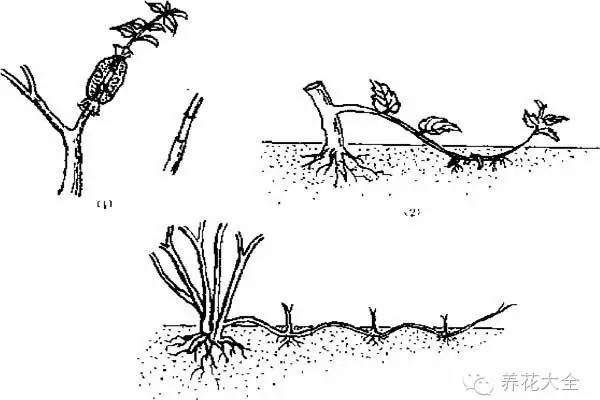
What is Layering?
Layering is a method in which a branch or vine of a plant is buried in a moist growing medium, and once roots have formed, the branch is cut away from the mother plant to form a new plant.
▼As shown in the example, the part in contact with the soil will quickly produce new roots.
What Kind of Branches Are Suitable for Layering?
When layering, generally choose mature, plump, pest- and disease-free one- or two-year-old woody branches. However, the position chosen will vary depending on the plant type and the layering method. Next, Huahua will introduce the 5 most commonly used layering methods, so come and learn them quickly.
5 Major Layering Methods - There Is Always One That Suits You
Simple Layering
Simple layering is the most commonly used layering method. Take the branch closest to the ground and press it directly into the soil, or press it directly into a flower pot (this way you don't need to transplant it~). After a few months, you will have a new plant.
Specific steps:
1. Select a robust branch, press it horizontally into the potting medium. The part in contact with the soil needs a ring of bark removed, which promotes the development of meristematic tissue and quickly forms roots.
2. Cover the branch with soil.
3. To ensure the branch and soil are in close contact, you can place a stone on top to press it down.
4. Water frequently to keep the soil moist. After one to two months, the plant will grow new roots. At this point, cut the branch off, and we have obtained a new plant.
Air Layering
For air layering, choose an appropriate position that is easy to work with. Use a small knife to make a ring cut on the branch, then wrap it with a water-absorbing medium and a plastic bag (to retain water). Once the branch has rooted, it can be cut off and planted.
Image source: Flower friend Hanbao Daifang
Specific steps:
1. Select a 1- to 3-year-old branch, make a ring cut 2-4 cm wide, scrape off the bark or make vertical cuts into it.
2. Use cotton or another water-absorbing medium (the medium must be moistened) to wrap the cut area;
3. Wrap the cotton with a plastic bag.
4. Fill the plastic bag with an appropriate amount of soil, then tie it tightly to secure it, and water. That's it done.
5. After about two to three months, new roots will have formed. At this point, remove the plastic bag, and you can see the complete root system. Cut below the roots on the branch, pot it up and water it.
Mound Layering
Mound layering is suitable for plants with strong basal shoot formation or clump-forming growth habits, such as Sorbaria sorbifolia (false spiraea), Rosa xanthina (Manchu rose), pomegranate, and so on. The method is also the easiest: wound the branches at the base, then cover them with soil. Once roots have formed, simply divide them into new plants.
Specific steps (using rose as an example):
1. Choose a healthy plant and wound the branches at the base of the plant;
2. After wounding, cover the plant with soil. After some time, the wounded area will form new roots and grow new terminal buds. Divide them again and pot them up.
Wavy Layering
Wavy layering is more suitable for vining plants that bend easily, such as winter jasmine and grape. When layering, bend the branch up and down into a wave shape, bury the parts that touch the ground into the soil, and after some time a new plant will form.
Horizontal Layering
Horizontal layering is suitable for plants with long branches that root easily, such as climbing roses. When layering, dig a small trench along the direction of the branch, wound the branch every 10-20 cm, then bury the wounded branch directly into the prepared trench and firm the soil over it.
▼Plants obtained by water layering
Flower friends, have you learned it?