What other names does gooseberry have? A list of common alternative names for gooseberry
What are the alternative names for gooseberry? Gooseberry belongs to the family Saxifragaceae and the genus Ribes. Alternative names for gooseberry include cìli (cider gooseberry), cì'er lǐ, and lantern fruit. Geographical distribution of gooseberry: red currant is mainly distributed in Europe, and is most famous in Finland and Norway in Northern Europe. Since it was introduced to China more than 80 years ago, it has been distributed in both northern and southern China, while black currant is mainly cultivated in the three northeastern provinces of China. Gooseberry morphology 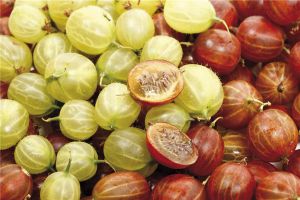
Have you often seen currant, that is, gooseberry, this kind of fruit in jams, jellies, and fruit wines? Research shows that gooseberry is good for the cardiovascular system and can also improve immunity. Below, the editor will introduce this magical plant to you.
Gooseberry genus and family
Saxifragaceae, Ribes
Gooseberry alternative names
Currant, cì'er lǐ, lantern fruit
Gooseberry geographical distribution
Red currant is mainly distributed in Europe, and is most famous in Finland and Norway in Northern Europe. Since it was introduced to China more than 80 years ago, it has been distributed in both northern and southern China, while black currant is mainly cultivated in the three northeastern provinces of China.
Gooseberry morphological characteristics
Gooseberry is a deciduous shrub. The plant is short but spreading, and the new branches are covered with sharp thorns. Its branching ability is extremely strong, and one plant cluster can produce more than 50 branches; the lower half of the new shoot of gooseberry consists of axillary buds, while the middle and upper parts of the new shoot form flower buds, and the flower buds are mixed buds; gooseberry flowers are solitary or clustered in groups of 2-3; gooseberry fruits are clustered on bouquet-like fruiting branches; the lifespan of gooseberry is generally 7-8 years.
Gooseberry growth characteristics
Gooseberry has strong basal branch tillering ability and high yield. It generally blooms in mid-to-late May, finishes blooming by the end of May, and the fruit is harvested in late June or July. It comes to market earlier than other fruits and is tolerant of storage and transport.
Gooseberry is tolerant of high and low temperatures. Generally speaking, under conditions of 40 degrees above zero and 40 degrees below zero, gooseberry will not die. Gooseberry is suitable both for large-scale planting as a fruit tree to obtain economic benefits and for scattered planting on balconies and in gardens for decoration.
Gooseberry flower meaning
Conjecture, prediction.
For more professional agricultural science and technology information, please scan the QR code to follow WeChat: NongXunNET

Please indicate the source when reprinting.