What does "unbending and free" mean? A detailed interpretation
Introduction: Evening primrose is a species in the genus Oenothera, family Onagraceae. It has strong adaptability, tolerates acid and drought, and is not picky about soil; it can grow in generally neutral, slightly alkaline or slightly acidic soil, and in well-drained, loose soil. In soil that is too wet, its roots are prone to disease. In the north it is an annual plant, and south of the Huai River it is a biennial plant.
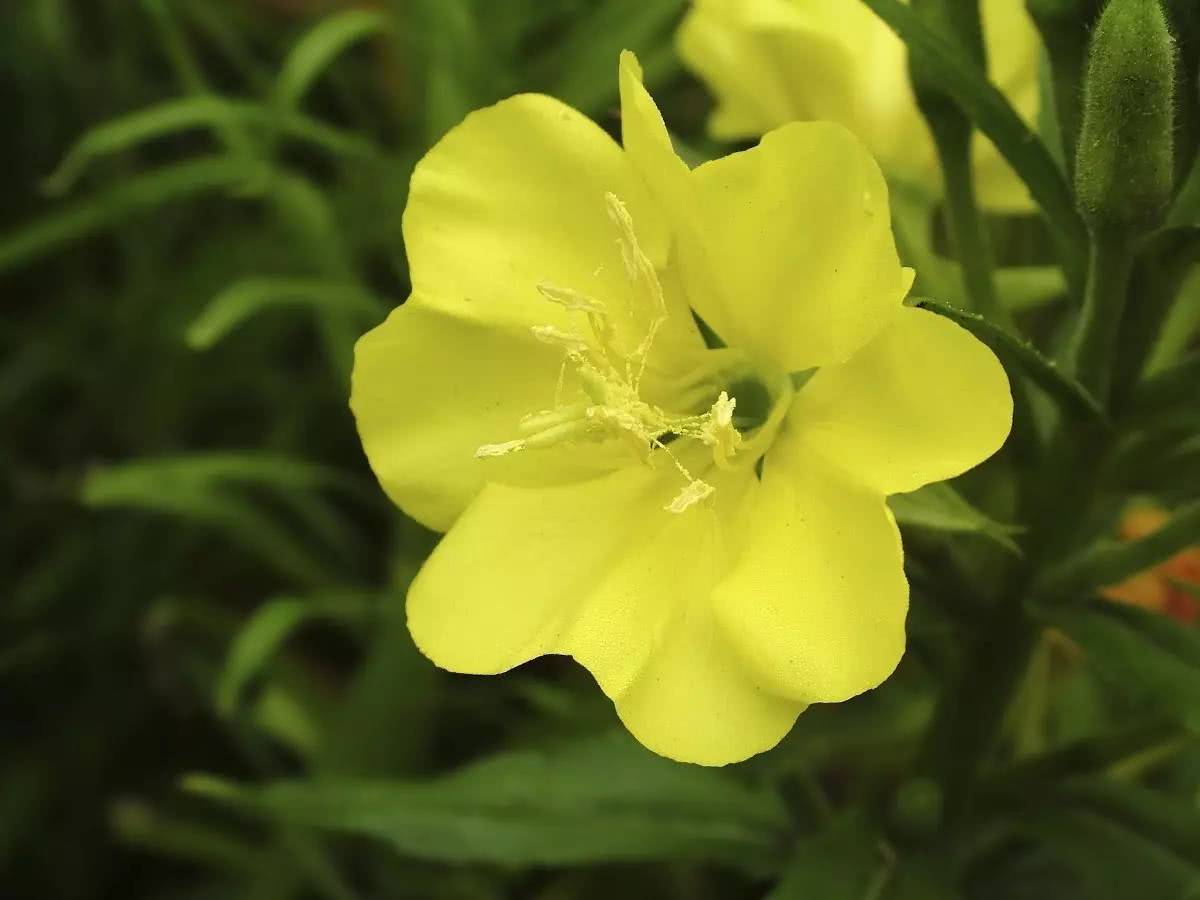
Evening primrose is a species in the genus Oenothera, family Onagraceae. It has strong adaptability, tolerates acid and drought, and is not picky about soil; it can grow in generally neutral, slightly alkaline or slightly acidic soil, and in well-drained, loose soil. In soil that is too wet, its roots are prone to disease. In the north it is an annual plant, and south of the Huai River it is a biennial plant. It is the most important nutritional medicine discovered this century. It can treat many diseases, regulate lipid substances in the blood, and has a significant therapeutic effect on coronary artery infarction, atherosclerosis, and cerebral thrombosis caused by high cholesterol and high blood lipids.
Evening primrose
Morphological characteristics:
An upright, robust biennial herb, with a basal rosette of leaves pressed close to the ground; the stem is 50~200 cm tall, unbranched or branched, covered with curved soft hairs and spreading long hairs (the bases of the hairs are blister-like), and glandular hairs are often mixed in at the upper end of the stem and branches.
Basal leaves are oblanceolate, 10~25 cm long, 2~4.5 cm wide, with a sharp-pointed tip, a wedge-shaped base, and sparsely irregular shallow blunt teeth along the margin; lateral veins are 12~15 per side, and both surfaces are covered with curved soft hairs and long hairs; the petiole is 1.5~3 cm long. Stem leaves are elliptical to oblanceolate, 7~20 cm long, 1~5 cm wide, with a sharp-pointed to shortly acuminate tip, a wedge-shaped base, and 5~19 sparse blunt teeth on each side of the margin; lateral veins are 6~12 per side, and both surfaces on each side are covered with curved soft hairs and long hairs, especially on the lower surface and leaf margins of the upper stem leaves, where glandular hairs are often mixed in; the petiole is 0~15 mm long.
The inflorescence is spicate, unbranched, or with secondary lateral inflorescences below the main axis; the bracts are leaf-like, reaching 1/2 the length of the flower in bud, becoming elliptical-lanceolate as they grow, decreasing in size from bottom to top, nearly sessile, 1.5~9 cm long, 0.5~2 cm wide, and persistent in fruit; the flower buds are conical-oblong, 1.5~2 cm long, 4~5 mm thick, with a beak about 3 mm long at the tip; the floral tube is 2.5~3.5 cm long, 1~1.2 mm in diameter, yellow-green or tinged with red when flowering, covered with a mixture of soft hairs, spreading long hairs, and short glandular hairs; it falls off after flowering; the sepals are green, sometimes tinged with red, oblong-lanceolate, 1.8~2.2 cm long, 4~5 mm wide at the broad lower part, abruptly narrowed at the tip into a tail-like point 3~4 mm long, upright in bud and pressed against each other, reflexed from the base when open but turned upward again in the middle, with the same hair covering as the floral tube; the petals are yellow, rarely pale yellow, broadly obovate, 2.5~3 cm long, 2~2.8 cm wide, with a slightly notched tip; the filaments are nearly equal in length, 10~18 mm long; the anthers are 8~10 mm long, and about 50% of the pollen develops; the ovary is green, cylindrical, 4-angled, 1~1.2 cm long, 1.5~2.5 mm thick, densely covered with spreading long hairs and short glandular hairs, sometimes mixed with curved soft hairs; the style is 3.5~5 cm long, with the part extending beyond the floral tube 0.7~1.5 cm long; the stigma is surrounded by the anthers. At flowering, pollen is deposited directly on the stigma lobes, and the lobes are 3~5 mm long.
The capsule is conical-cylindrical, narrowing upward, 2~3.5 cm long, 4~5 mm in diameter, upright. It is green, with the same hair covering as the ovary but gradually becoming sparser, and with obvious ridges. The seeds are arranged horizontally in the fruit, dark brown, prismatic, 1~1.5 mm long, 0.5~1 mm in diameter, with angled edges and irregular pitted surfaces on each face.
Evening primrose
Medicinal value:
Dispels wind-dampness; strengthens tendons and bones. It mainly treats wind-cold-dampness impediment; soreness and weakness of tendons and bones, activates blood and unblocks collaterals; extinguishes wind and calms the liver; reduces swelling and promotes healing of sores. It mainly treats chest impediment and heart pain; stroke with hemiplegia; internal stirring of deficiency wind; hyperactivity in children; rheumatic numbness and pain; abdominal pain and diarrhea; dysmenorrhea; houdou; sores and ulcers; eczema.
Economic value:
This species has fragrant and beautiful flowers and is often cultivated for ornamental use. The flowers can be used to extract aromatic oil; the seeds can be pressed for oil for food and medicinal use; the stem bark fiber can be made into rope; its seeds contain 25.1% oil, of which Y~linolenic acid reaches 8.1%, making it the species with the greatest development prospects.
Evening primrose
Plant culture:
There is a saying that when a woman gives evening primrose to a man, it represents 'silent love'; there is also a common saying that evening primrose represents an unyielding heart and a free heart; some also say the flower language of evening primrose is the magic of 'a beauty after bathing'.
For more professional agricultural science and technology information, please scan the QR code to follow WeChat: NongXunNET

Please indicate the source when reprinting.