What to Do When Succulents Grow "Beards"? Learn This One Trick to Solve It Easily
Beginners who have just started growing succulents will surely wonder why some root tendrils, like beard-like things, grow from the bottom of their succulents. Could it be that the succulent is sick? Actually, these "beards" on succulents are aerial roots. ...
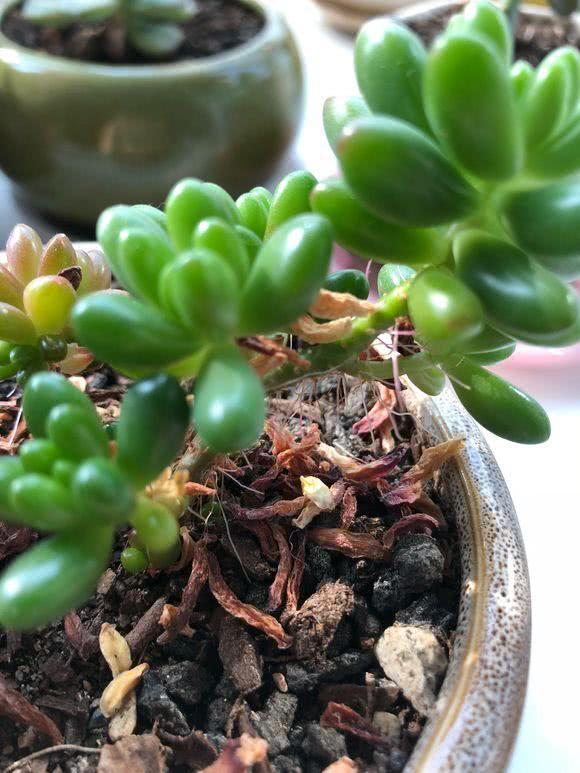
Beginners who have just started growing succulents will surely wonder why some root tendrils, like beard-like things, grow from the bottom of their succulents. Could it be that the succulent is sick?
Actually, these "beards" on succulents are aerial roots. When a succulent grows aerial roots, it means its root system cannot absorb enough water, so it can only grow aerial roots from the branches and stems to absorb moisture from the air. If your succulent has grown a "beard," don't worry too much. This actually shows that your succulent is still growing very healthily, because it still knows how to grow aerial roots on its own to find water to drink!
So why exactly do succulents grow aerial roots, and after they grow aerial roots, how should we handle them?
Then let's take a look together!
There are mainly three reasons why succulents grow aerial roots
1. Dry soil and excessive lack of water
This is the most common reason why succulents grow aerial roots. Sometimes, because we are too busy with work, we forget to water our succulents for a long time. Because the soil is very dry, the succulent's root system can no longer absorb water from the soil, so it can only grow aerial roots from the branches and stems to look for moisture in the air.
Solution: If a succulent grows aerial roots because of lack of water, we can water it in time and keep it sufficiently hydrated, which will stop it from growing a "beard" and return it to its original plump appearance!
2. Because of black rot or accidental damage to the succulent's root and stem area
Due to bacterial infection, the root and stem area of the succulent develops black rot, but the head of the succulent wins in its struggle against the enemy, so it grows aerial roots and survives tenaciously. Or because of some external force, such as strong wind, or because we accidentally break the succulent's branches and stems ourselves, causing it to be unable to absorb water from the roots, it will also grow aerial roots.
Solution: In this case, we can directly cut off both the black-rotted damaged part and the broken part of the succulent, keep the healthy head of the succulent, and bury its aerial roots in slightly moist soil to propagate. Because the aerial roots are there, the succulent can quickly absorb water and continue to grow healthily.
After about a week or so, you can gently shake the succulent to see whether it has already taken root and become firmly established. If you feel that the succulent is already stable in the new soil, then at this time you can properly apply some organic nutrient solution, mix it with water, and water the roots. Give the succulent some nutrients to promote rooting.
3. The succulent's branches and stems are too tall or excessively woody
This is generally more common in old-stock succulents, because when the branches of an old-stock succulent are too tall or woody, the succulent cannot absorb water from the roots in time, so it will also grow aerial roots to look for moisture in the air.
Solution: There is no need to worry too much in this case either. If you don't like the aerial roots that have grown, you can also cut them off, but just make sure to replenish water in time.
So, when a succulent grows a "beard," it is reminding us that it is very thirsty! Hurry and give your succulents some water in time!
For more professional agricultural science and technology information, please scan the QR code to follow WeChat: NongXunNET

Please indicate the source when reprinting.