These are the flowers an old gardener recommends growing in spring. How many of them do you have at home?
Ten miles of spring breeze is not as good as growing succulents! Recently many flower lovers have started to buy potted succulents one after another, so the editor wants to ask everyone, do you know which succulents are most suitable for growing in spring? The succulents in the flower market are both beautiful and dazzling...
Ten miles of spring breeze is not as good as growing succulents! Recently many flower lovers have started to buy potted succulents one after another, so the editor wants to ask everyone, do you know which succulents are most suitable for growing in spring? The succulents in the flower market are both beautiful and dazzling, so below the editor of Jiangxin shares with everyone several succulents worth having in spring.
The editor's friend Fangfang is a veteran succulent fan, so she has rich experience in choosing and growing succulents. Spring has arrived, and Fangfang says these four pots are indispensable among the succulents at home. They are not only lovely in appearance, but also relatively easy to grow!
1. Corn stone
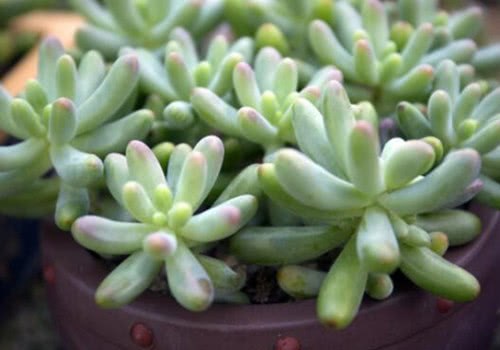
Corn stone looks plump and round, tender green, and is a cute and charming succulent, especially the stems and leaves that are each like a baby's little finger, making you unable to resist touching them more. It has poor cold resistance, so the indoor temperature in winter should not be lower than 10 degrees. It likes a sunny and well-ventilated environment, and can also grow in partial shade. Its soil requirements should be fertile, loose and breathable, with sandy soil and leaf mold being most suitable. It is fairly drought-tolerant. Normally water it so that it is not watered until dry, and when watering, water thoroughly. Avoid water accumulation in the pot.
2. Black Prince
The succulent Black Prince has the form of a neat lotus-leaf rosette, and with its noble color, it is highly ornamental and very attractive. Sufficient sunlight can gradually turn its color red, until it finally becomes black. It likes a warm and dry environment, is strongly drought-tolerant, and has average cold resistance. The winter temperature should not be lower than 10 degrees. When summer arrives, the plant enters a semi-dormant period, when its growth rate is slow, so pay attention to ventilation and shading. It should be repotted once a year, and the soil should be fertile and have good drainage. A mix of vermiculite, leaf mold and garden soil is a good choice.
3. Jade plant
Jade plant has thick fleshy leaves, is emerald green in all four seasons, and bears white flowers at the tips, making it very intellectual and elegant when placed beside a desk or windowsill. It symbolizes good fortune and wishes coming true, and is deeply loved by many families. It is not cold-tolerant and fears strong light. In winter the temperature should not be lower than 4 degrees, otherwise the leaves will be frostbitten. The most suitable growing temperature is between 15 degrees and 32 degrees. Spring and autumn are the seasons when it grows most vigorously, so increase the frequency of watering, watering once every 1 to 2 days. In summer, when temperatures are high, prepare for shading and ventilation, and you can spray a little water on the leaves to maintain a certain humidity.
4. Haworthia cooperi
Haworthia cooperi is small and exquisite, rich in variation in form, and its leaves are crystal clear, with a glowing effect of their own! It loves a cool, semi-shady environment and needs a certain humidity. It fears high temperatures and exposure to the sun, so in summer it should be moved to a cool, ventilated place. Its cold resistance is acceptable, and it can withstand low temperatures of 3 to 5 degrees. For the soil, choose a sandy soil containing lime and coarse particles. A mix of leaf mold, vermiculite and coarse sand is best, and adding a fixed amount of peat soil can strengthen the organic matter in the soil. It should not be watered too much; keeping the pot soil moist is enough. Never let it be exposed to rain, to avoid root rot.
How much more do you know about succulents to get in spring? You are welcome to leave us a message in the comment section below!
For more professional agricultural science and technology news, please scan the QR code to follow WeChat: NongXunNET

Please indicate the source when reprinting.