Brightly colored fruit with good appearance is more attractive
Introduction: Hound's Tongue: A perennial herb of the Boraginaceae family, genus Cynoglossum, reaching up to 60 cm in height. The stems are densely covered with appressed short soft hairs. Basal leaves are oblong-lanceolate or lanceolate; stem leaves are oblong or lanceolate, sessile; the inflorescence branches at acute angles, dense, extending straight upward, paniculate, without bracts; lobes ovate or oblong, corolla
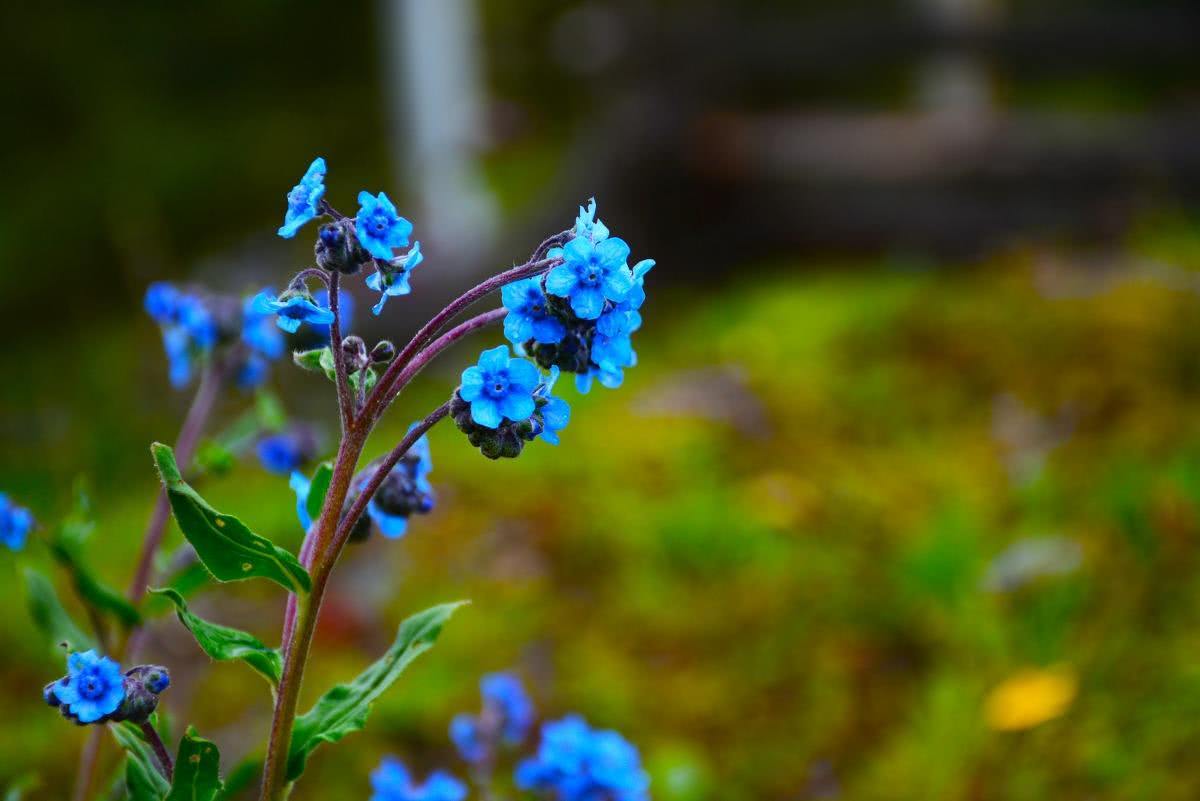
Hound's Tongue: A perennial herb of the Boraginaceae family, genus Cynoglossum, reaching up to 60 cm in height. The stems are densely covered with appressed short soft hairs. Basal leaves are oblong-lanceolate or lanceolate; stem leaves are oblong or lanceolate, sessile; the inflorescence branches at acute angles, dense, extending straight upward, paniculate, without bracts; lobes ovate or oblong, the corolla usually blue, rarely white, lobes rounded; the style is linear-cylindrical; nutlets are ovate; flowering and fruiting period is from May to September.
Hound's Tongue
It is found in Yunnan, western Guizhou, southwestern to southeastern Xizang, western Sichuan and southern Gansu in China. It grows on hillside grasslands, mountain shrublands, dry roadsides and the edges of coniferous forests. It is also distributed in Bhutan. Hound's Tongue is a well-known medicinal plant, with its roots and whole plant used as medicine; it has effects such as clearing heat and draining dampness, dissipating blood stasis and stopping bleeding, and relieving cough. Because of its dense flowers and brilliant flower color, it also has high ornamental value.
Hound's Tongue
The inflorescence branches at acute angles, the branches are dense, extending straight upward, gathered into a panicle, without bracts; pedicels 2-3 mm long, slightly elongating in fruit; calyx 2.5-3.5 mm long, densely covered with soft hairs on the outside, lobes ovate or oblong, apex acute; corolla usually blue, rarely white, 5-6 mm long, limb 8-10 mm in diameter, lobes rounded, about 2.5 mm long, with obvious reticulate veins, throat with 5 trapezoidal appendages, appendages about 1 mm long; filaments about 0.5 mm long, inserted at the middle of the corolla tube, anthers oblong, about 1 mm long; style linear-cylindrical, nearly equal to or shorter than the calyx. Nutlets ovate, 3-4 mm long, slightly concave on the back, densely covered with anchor-like spines, the bases of the marginal anchor-like spines united, forming a narrow or broad wing-like margin, with a triangular attachment scar above the middle on the ventral side.
Hound's Tongue
Medicinal value:
1. Treating cough and spitting blood. Hound's Tongue tastes relatively sweet, is neutral in nature, and is not toxic. Therefore it is often used as medicine to treat some ailments; for example, it can nourish yin and moisten the lungs, clear heat and stop cough. People with relatively severe coughs must, under guidance, choose a certain amount, which can effectively relieve our cough. In addition, in some rural areas and pastoral areas it is often used to treat some nosebleeds and spitting blood, but the specific dosage must also be used under the guidance of professionals; it must not be used indiscriminately, and this point must be noted.
2. Inhibiting the central nervous system and lowering blood pressure. In the extract and concentrated extract of Hound's Tongue there is a component that can effectively control our central nervous system and can also effectively lower blood pressure, so people with high blood pressure can consult professionals to see how exactly to use it; it is a relatively safe blood-pressure-lowering medicine.
3. Medicinal use for repelling rats. Hound's Tongue also has another medicinal name, namely "rat's sorrow," so it is a very famous rat-repelling plant. It is a biennial medicinal plant, generally mainly common in Europe and northern Asia. After we dry its plant, it can give off an odor that rats find especially unbearable; after rats smell its odor they immediately flee, let alone let it get close to them. So when some rats encounter it, some would rather jump into water and kill themselves than smell it again, so it is a very good rat-repelling wonder drug. It has a very good effect on driving away rats.
4. Treating wind-cold paralysis and irregular menstruation. Hound's Tongue is recorded in history as also being able to effectively treat some rheumatic ailments, and it also has a good effect on tingling in the hands and feet. In addition, it has a good effect on some women with irregular menstruation and those who have not conceived for a long time after marriage. But exactly how to use it also cannot be used blindly; it must be used according to the guidance of professionals.
For more professional agricultural science and technology information, please scan the QR code to follow WeChat: NongXunNET

Please indicate the source when reprinting.