Don't know how to grow flowers? Bury a little of this in the pot, no root rot and blooms fill the pot
Usually we love growing flowers, and there are quite a few friends who enjoy looking at flowers, but very few truly know how to grow them, because growing flowers looks simple but actually involves many details. As long as you master these flowers' growth habits and key growing points, ...
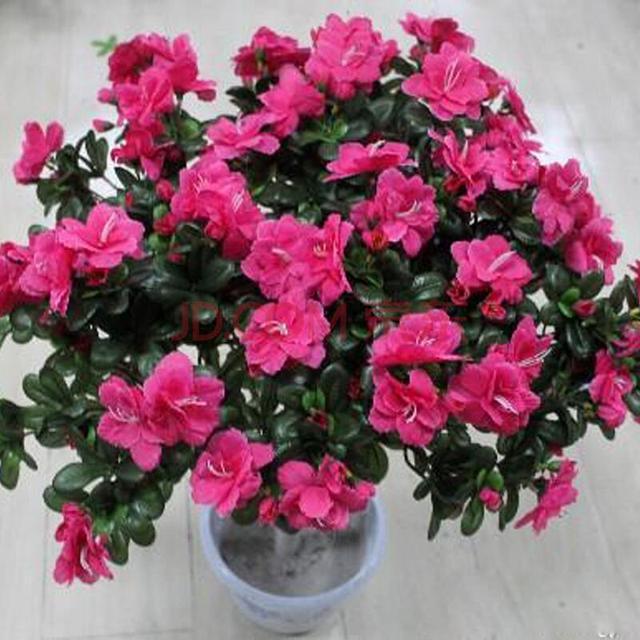
Usually we love growing flowers, and there are quite a few friends who enjoy looking at flowers, but very few truly know how to grow them, because growing flowers looks simple but actually involves many details. As long as you master these flowers' growth habits and key growing points, you can use some casually picked-up waste to grow them with lush branches and leaves and a profusion of blooms. Much better than bought flower-growing gadgets.
1. Put this at the bottom of the clivia pot, and it never gets root rot
Many green belts have pine trees that produce lots of small pine cones. Although they have no pine nuts, they are excellent material for growing flowers. Pick up some pine cones under the pine trees, soak them in carbendazim for half an hour to sterilize and disinfect, then dry them and spread them at the bottom of the clivia pot as a drainage layer. This can drain excess water and keep the clivia roots aerated without waterlogging, so there is no need to worry about root rot at all. When the roots are strong, the plant will be robust, and the same goes for other flowers.
Sprinkle a handful of castor seeds in the clivia pot, and the leaves turn glossy green
Clivia likes fertilizer. Many big clivia growers use roasted castor beans as fertilizer when repotting. Castor beans are very oily, and the clivia grown with them is glossy and shiny with excellent appearance.
If we do not have castor beans on hand, we can also use roasted sunflower seeds as fertilizer. Dig a few holes around the edge of the pot, put seven or eight sunflower seeds or castor beans in each hole, and that is enough. The oily substances are released slowly, and after the clivia absorbs them, the leaves become especially glossy and the plant very robust.
2. Put a little of this in the pothos pot, and it climbs all over the wall; it never gets yellow leaves or root rot
Pothos likes loose, fertile soil. To make the pothos soil loose and aerated, you need to give it an aerated drainage layer at the bottom. Coal cinder is a good choice. This free golden soil, after we burn honeycomb coal briquettes, can be soaked in water to remove alkalinity, then crushed. Use the large particles as a drainage layer; it is not only loose and aerated but also replenishes trace elements, and it costs nothing. Isn't that a great choice?
Usually the okara left over from making soy milk is a pity to pour out. We can use it to grow pothos. Squeeze the water out of the okara and stir-fry it in a pan.
.When using it, dig 2-3 small holes along the edge of the pothos pot, sprinkle in a little roasted okara, do not let it touch the roots, then cover with soil. Apply about once every 1 month, and the pothos will grow 3 times faster than other people's and the leaves will be especially large!
3. Put this in the Christmas cactus pot, and the leaves are glossy green with many flowers
The root system of the Christmas cactus is very weak, so we usually graft Christmas cactus onto other rootstocks, such as cactus, Pereskia, etc. However, as long as you pay attention to a few methods, own-rooted Christmas cactus can also be grown for decades. For example, we can put a layer of water-permeable substrate at the bottom of the pot; coarse sand is a good choice.
1. Christmas cactus basically dies from root rot, so the bottom of the pot must have some water-permeable substrate to prevent waterlogging and root rot, and coarse sand is a good choice.
We can wash relatively large sand particles clean and pour them into the bottom of the Christmas cactus pot, about a few cm is enough. This sand can drain excess water and prevent waterlogging and root rot, so our Christmas cactus will no longer be prone to root rot.
Bury a little bone meal in the pot, and buds keep popping out nonstop
We know that phosphorus fertilizer promotes flowering, so we can also apply some phosphorus fertilizer to the Christmas cactus to make the flowers bloom more and larger. The bones and fish bones left over from the chicken, duck, and fish we usually eat are rich in phosphorus and can be used to grow flowers. After sun-drying chicken bones and fish bones for a few days, crush them and bury a little around the edge of the Christmas cactus pot. This can supplement phosphorus fertilizer and make the Christmas cactus bloom more and more beautifully.
4. Put bricks in the succulent pot; they grow fast and do not get root rot
People who grow succulents all know about expanded clay pebbles. This is a flower-growing wonder that ensures the soil is loose and aerated. When growing flowers, put a layer at the bottom of the pot, and the roots are especially robust and never rot. If there are no expanded clay pebbles, we can also use crushed bricks instead, because bricks have properties similar to expanded clay pebbles; both are made by firing at high temperature. Used as a drainage layer at the bottom of the pot, they are loose and aerated, and there is never root rot.
For the soil used to grow succulents, we can also use soaked coal cinder. It is loose and aerated and especially suitable for growing succulents.
Bury a little slow-release fertilizer in the pot, and they grow 3 times faster than others
Our succulents generally grow very slowly. If we want them to grow a bit faster, we can apply some slow-release fertilizer to the succulents. The fertilizer effect is slow, will not burn the roots, and the results are good.
For more professional agricultural science and technology information, please scan the QR code to follow WeChat: NongXunNET

Please indicate the source when reprinting.