What are the common varieties of aquatic plants that purify water quality
Introduction: Nuphar pumila, also known as golden lotus and Nuphar pumila, is a plant of the genus Nuphar in the family Nymphaeaceae. This genus has about 25 species and blooms in early summer, making it a very important ornamental plant in summer waterscape gardens. Its Latin species epithet pumilum means "dwarf". Nuphar pumila Taiwan Nuphar pumila was described by Japanese botanist Yaichi Shimada in 1915
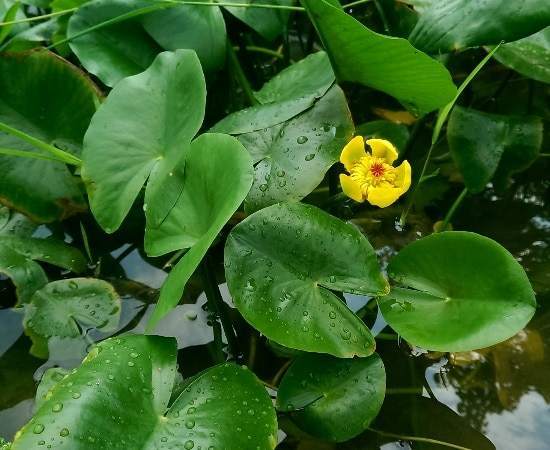
Nuphar pumila, also known as golden lotus and Nuphar pumila, is a plant of the genus Nuphar in the family Nymphaeaceae. This genus has about 25 species and blooms in early summer, making it a very important ornamental plant in summer waterscape gardens. Its Latin species epithet pumilum means "dwarf".
Nuphar pumila
Taiwan Nuphar pumila was collected by Japanese botanist Yaichi Shimada in 1915 in Xinpu, Hsinchu County. Japanese botanist Bunzo Hayata published it as a new species in 1916 in the Illustrated Flora of Taiwan. The species name shimadai is to commemorate its collector Shimada Ichi, and the type specimen (Isotype) is kept in the herbarium of the Taiwan Forestry Research Institute. The characteristic of this plant is that the leaf shape is nearly round, and the underside of the leaf has many hairs, though these are not easy to see with the naked eye and can only be seen clearly under a dissecting microscope. In addition, the tip of the stigma is split, and both sides of each lobe are red, making Taiwan Nuphar pumila more ornamental than other species of Nuphar pumila.
Nuphar pumila
Compared with water lilies, most people are less familiar with "Taiwan Nuphar pumila". The reason is nothing else: mainly because Taiwan Nuphar pumila originally had a relatively small and sparse population in Taiwan, and it is only distributed in a few ponds in Longtan, Taoyuan. Although there are collection records in Taoyuan, Hsinchu and Nantou in the western part of the province, the lack of more detailed information makes it difficult today to understand the past distribution and quantity of this plant.
Nuphar pumila
It can be potted in courtyards, in front of buildings, in front of rockery stones, or placed in sunny spots in front of a room. The roots have the function of purifying water bodies. In years of famine, the seeds could be pounded into rice and eaten. Experiments have shown that of the CH4 produced in the bottom mud where Nuphar pumila is planted, three quarters is released through the stems and leaves of Nuphar pumila; during the day, the CH4 concentration in the root system reaches 10%, while the concentration in the young stems and leaves extending above the water surface is greatly reduced. Not only living plants are the main release channels for trace gases; dead plants are also channels for the release of gases such as CH4 from the bottom mud. Brix's research showed that dead reed stems and leaves are still the main channel for CH4 release from the bottom mud. Even in winter, the maximum CH4 release rate through dead reed leaves can reach 64 mL m-2d-1.
For more professional agricultural science and technology information, please scan the QR code to follow WeChat: NongXunNET

Please indicate the source when reprinting.